Garage Door Closes Then Immediately Reopens: Sensor vs Travel Limits (How to Tell)
If your garage door starts to close but then immediately reopens, it’s frustrating—and it can leave your garage unsecured. The good news is that this problem usually comes down to one of two things:
- the safety sensors (photo-eyes) think something is in the way, or
- the opener’s travel limits (or close force) aren’t set correctly.
Those two issues look similar at first, but they leave different “clues.” This guide shows you how to tell which one you’re dealing with and what to check first.
Safety disclaimer: This guide covers safe troubleshooting only. Do not attempt DIY work on springs, cables, or hardware under tension—those components can cause serious injury. If the door is off-track, binding, or you’re unsure, contact a qualified garage door professional.
Quick answer: How to tell which one it is
Here’s the simplest way to narrow it down:
- If the door reopens before it touches the floor, it’s often a sensor/beam issue (or an obstruction).
- If the door touches the floor, then pops back up, it’s often a travel limit / close limit issue (or resistance at the bottom seal/floor).
That’s not a perfect rule, but it’s a very strong starting point.
What “sensors” and “travel limits” actually mean (in plain English)
Safety sensors (photo-eyes)
These are the two small sensors near the bottom of your garage door tracks. They shoot an invisible beam across the doorway. If the opener thinks the beam is blocked—or the sensors can’t “see” each other reliably—the door may reverse for safety.
Travel limits (close limit)
Travel limits tell the opener how far the door should move when opening or closing. If the opener thinks it hit the floor too early (or senses resistance), it may reverse to prevent damage.
Sensor vs Travel Limits: the key differences (fast comparison)
| Clue | More likely sensors | More likely travel limits / resistance |
|---|---|---|
| Door reverses before reaching the floor | Yes | Sometimes |
| Door hits the floor, then reverses | Sometimes | Yes |
| Opener light flashes when trying to close | Often | Sometimes |
| Sensors show blinking/off lights | Yes | No |
| Problem happens at certain times (afternoon sun) | Common | Unlikely |
| Door seems to “push” into the floor then bounce back | Unlikely | Common |
Use the table as a quick guide, then follow the steps below to confirm.
Step 1: Check the sensor lights (this takes 10 seconds)
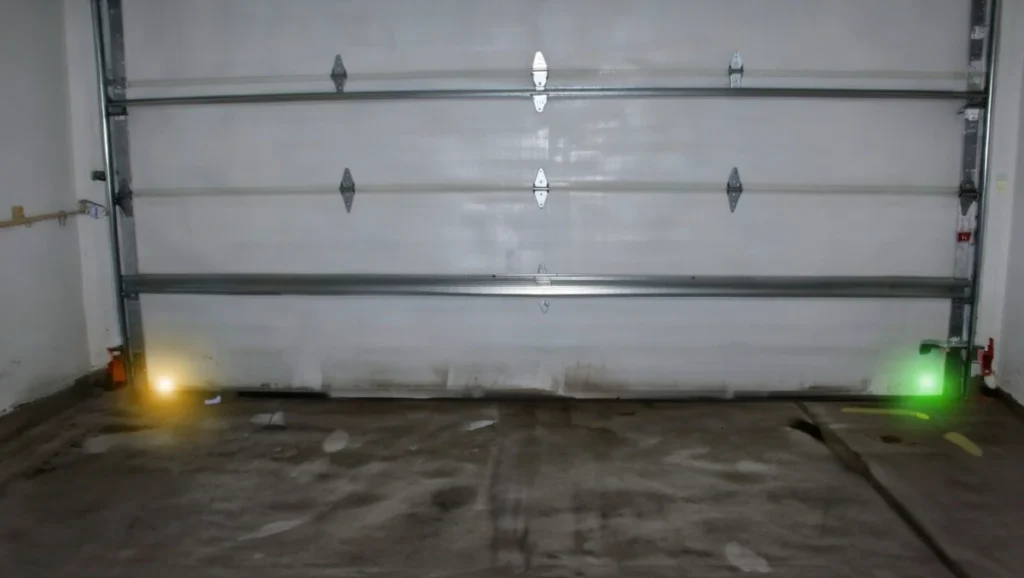
Before touching any settings, look at the sensors near the floor.
In many setups:
- one sensor has an amber/yellow light (sender)
- the other has a green light (receiver)
What you want is steady (solid) lights, not blinking.
If one light is blinking or off, treat it as a sensor issue first. Most “closes then reopens” complaints are solved by cleaning and aligning the sensors.
If you need detailed help:
- Blinking green guide: https://garageopenerfix.com/garage-door-safety-sensor-blinking-green/
- Blinking amber/yellow guide: (your amber post URL)
Step 2: Watch exactly when it reverses (this tells you a lot)
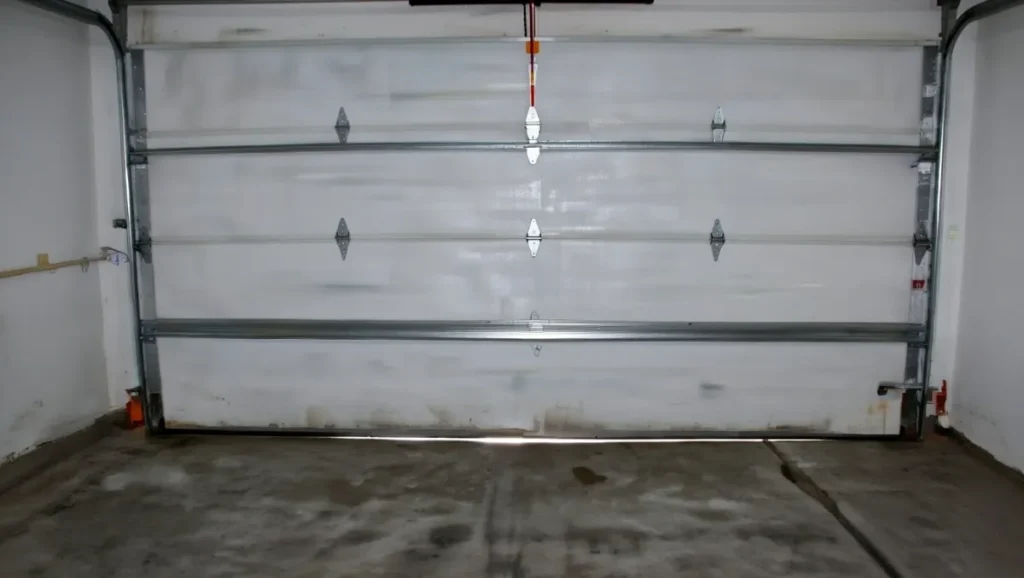
Do one controlled test where you stand inside the garage and watch the door closely:
- Does it reverse immediately after starting to close?
- Does it reverse at the same height every time?
- Does it reverse right when it touches the floor?
Consistency matters. If it reverses at the same spot repeatedly, it’s usually either:
- a beam interruption at that height (less common), or
- mechanical resistance at that point, or
- an incorrect limit setting.
Step 3: Try closing with the wall button (useful clue)
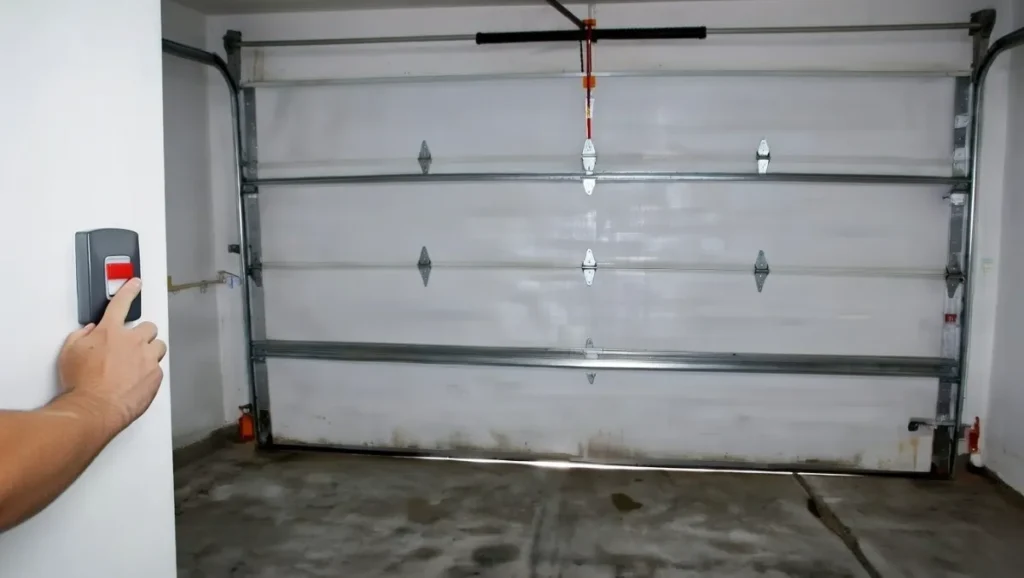
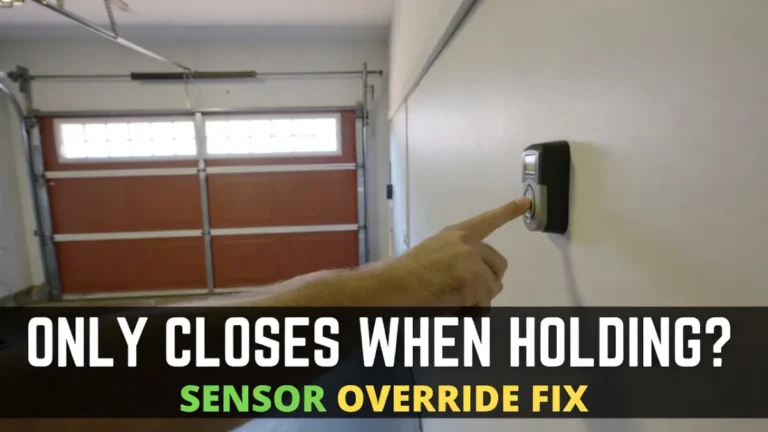
Many openers allow a temporary override: if sensors are the issue, the door may close only when you hold the wall button down continuously.
- If holding the wall button allows a full close, the opener is basically telling you: “Fix the sensor system.”
- If it still reverses even while holding the wall button, you may be dealing with resistance, limits, or another opener/door issue.
This test doesn’t fix anything—but it helps you diagnose faster.
Step 4: If it’s a sensor issue, fix this first (fast and safe)
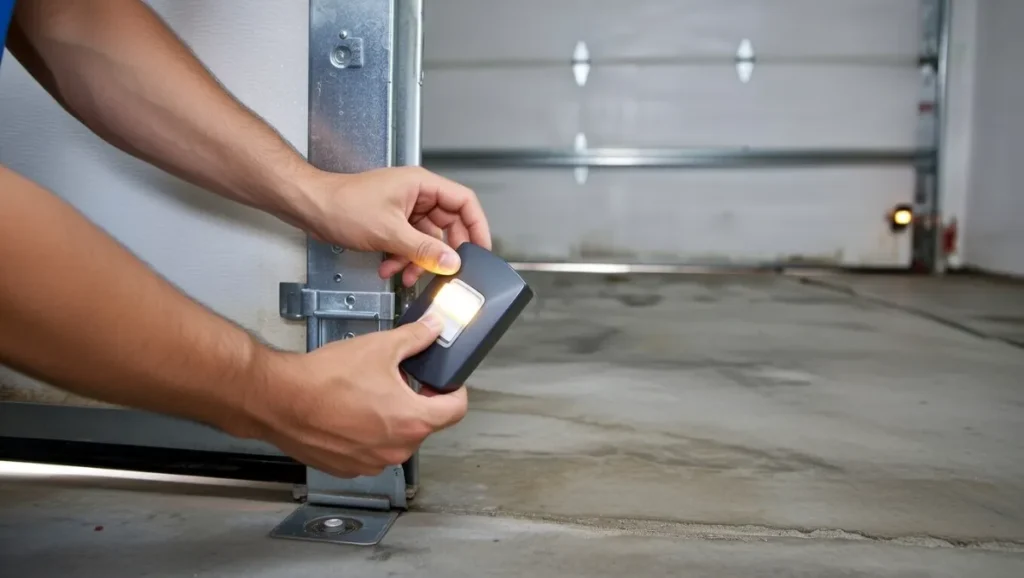
If the sensor lights aren’t solid, don’t touch travel limits yet. Start here:
Clean the lenses
A dusty lens can weaken the beam enough to cause random reversals, especially in older garages.
Wipe both sensor “eyes” with a microfiber cloth. If needed, put a tiny amount of glass cleaner on the cloth (don’t spray directly on the sensors).
Align the sensors
Even a small bump can knock them out of alignment.
Loosen the sensor wing nut or screw slightly, adjust until the blinking turns solid, then tighten gently without shifting it.
Check for sunlight/glare
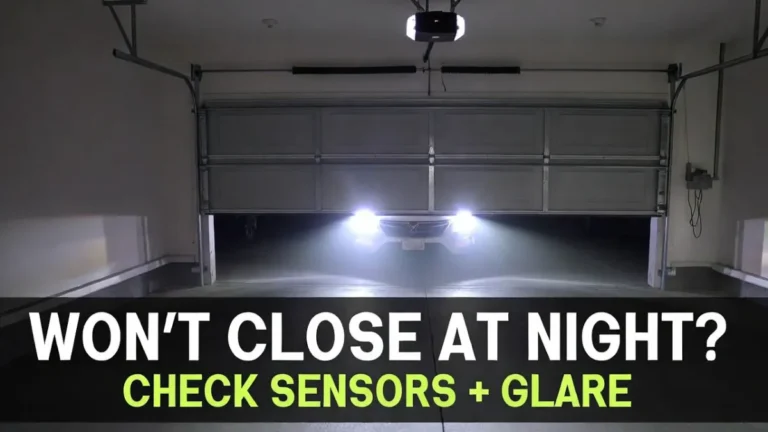
If the problem happens at certain times (often afternoon), sunlight can interfere with the receiving sensor. A small “visor” shade above the sensor can help a lot.
Once sensor lights are steady, test the door again. If the door now closes normally, you’re done.
Step 5: If sensors look perfect, check for resistance (very common)
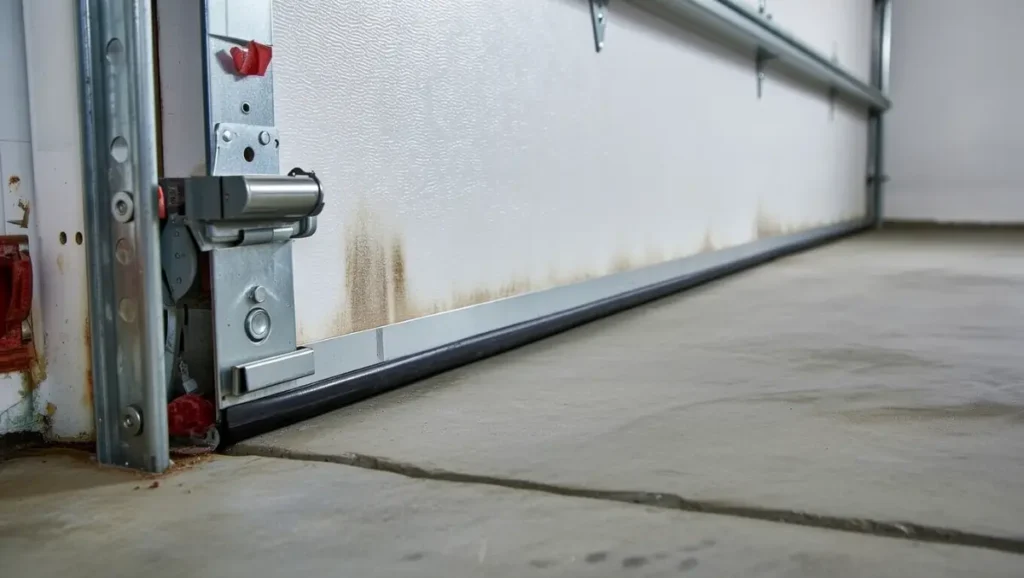
If both sensors show solid lights and the door still closes then reopens, don’t assume travel limits immediately. First, look for simple resistance points.
Check the floor seal area
Sometimes the bottom seal catches on uneven concrete, ice, debris, or a raised threshold.
Make sure the floor is clean where the door meets the ground. In winter areas, ice buildup can cause reversals.
Look at the tracks and rollers (visual check)
You’re not doing repairs here—just observing.
If you see the door jerking, rubbing hard, or looking crooked, that can trigger a reversal even with correct travel limits. If the door looks off-track or strained, stop and call a pro.
Step 6: How travel limits cause “touches floor then reopens”
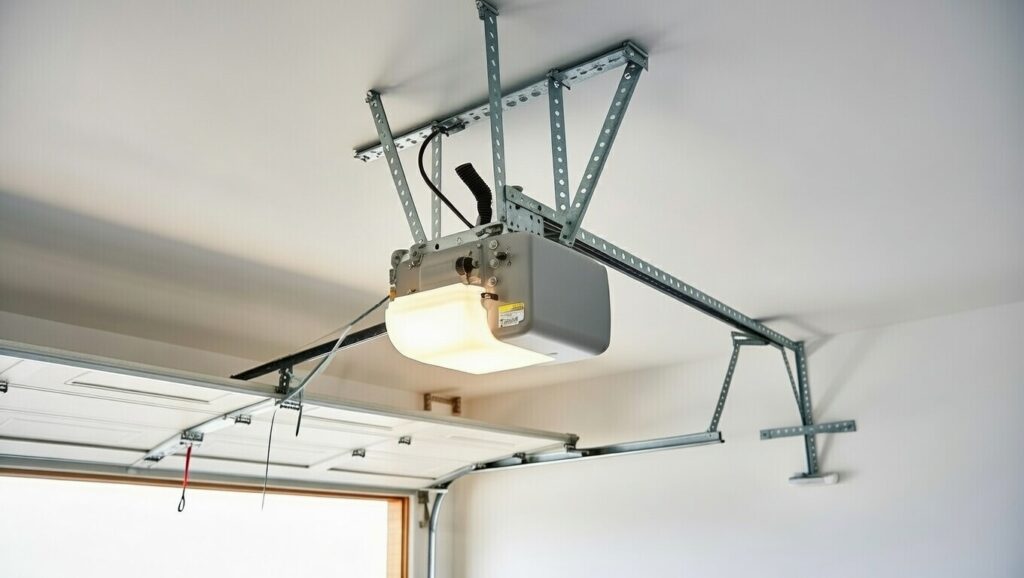
This is the classic travel-limit symptom:
- the door closes
- it touches the floor
- then the opener reverses as if it hit an obstacle
That usually means the opener thinks it traveled too far, or it senses too much resistance at the end of the close cycle. The opener is designed to reverse to prevent damage.
The safe way to approach travel limits
Because every opener model is different, the safest advice is:
- Find your opener’s manual/model instructions (often a label on the opener unit).
- Locate the close limit adjustment (sometimes called “down limit”).
- Adjust in tiny increments, then test after each adjustment.
If you’re not comfortable, this is a good point to bring in a technician. Incorrect adjustments can cause the door to not seal properly or create safety issues.
Important: If the door is reversing with force, slamming, or behaving unpredictably, don’t keep testing repeatedly—get help.
Step 7: What about “force settings”?
Some people jump straight to close-force settings. In many cases, force settings are not the first thing to change.
If force is set too low, the door may reverse because the opener “thinks” it hit resistance. But resistance often has a real cause—like friction, misalignment, or a bottom seal catching.
If you adjust force without fixing the real issue, you risk making the door less safe. So treat force adjustments carefully and only after checking sensors and obvious resistance.
A simple diagnostic flow (no complicated lists)
If you want a practical order that works in real life, do this:
- Check sensor lights (solid or blinking?).
- Clean and align sensors; retest.
- If sensors are solid, check floor/track area for resistance; retest.
- If it touches floor then reverses consistently, consider close limit adjustment (tiny steps, follow your manual).
- If anything feels unsafe or unclear, call a pro.
That sequence prevents you from changing settings unnecessarily.
When to call a professional (recommended)
Call a garage door technician if:
- the door is off-track or visibly crooked
- you hear loud grinding, popping, or metal-on-metal sounds
- the door feels unusually heavy (could indicate spring issues—do not touch)
- wiring is damaged
- travel limit adjustments don’t help after careful small changes
- you want a safety inspection (often worth it)
FAQs
Why does my garage door close and then reopen immediately?
Most commonly because the safety sensors aren’t getting a steady beam (dirty, misaligned, sunlight glare). If sensors are fine, travel limits or resistance at the bottom of the door are common causes.
If my sensors are solid, can it still be a sensor problem?
It’s less likely, but possible (intermittent wiring, vibration causing flicker, strong sunlight glare). Still, if both lights are consistently solid, look at resistance and limits next.
Door touches the floor then reopens—what’s the most likely cause?
That pattern often points to close travel limits being slightly off, or the opener sensing resistance at the bottom seal/floor.
Can I keep using the door if it reverses?
Try not to. Reversing is a safety behavior, but repeated reversing can strain the opener and still leave you with an unsecured garage. Diagnose and fix it as soon as possible.