Garage Door Opens a Few Inches Then Stops: Causes and Fixes (Balance, Binding, Limits)
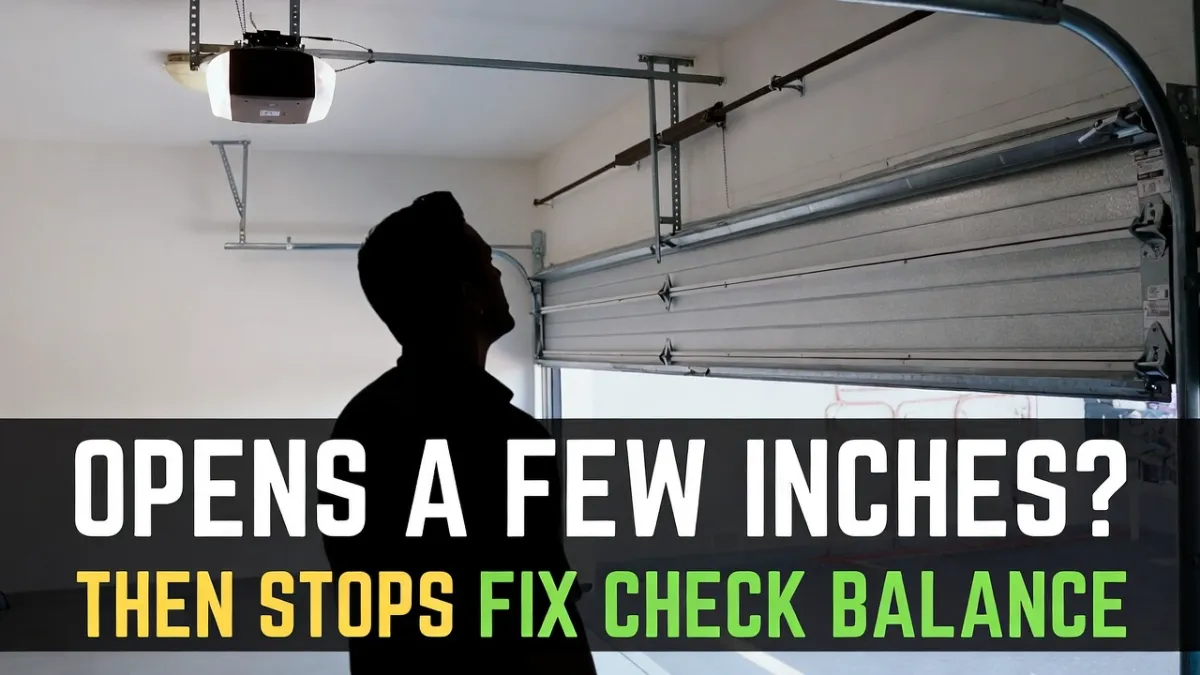
Garage Door Opens a Few Inches Then Stops: When a garage door opens only a few inches and then stops (or reverses), it usually means the opener is detecting something it doesn’t like—either the door is too heavy, something is binding, or the opener thinks it hit an obstruction. This symptom is different from “won’t close” problems, and it often has more to do with door balance and resistance than sensors.
The steps below help you narrow it down without doing risky DIY repairs.
Safety disclaimer: Do not attempt repairs involving garage door springs, cables, or hardware under tension. If the door feels unusually heavy or jerky, stop and call a qualified garage door technician.
First, notice exactly what happens (it matters)
Before changing anything, watch one full attempt and answer this:
Does the opener start, lift the door 2–6 inches, then stop and reverse? Or does it stop and stay there? Does it make a humming sound? Does the opener light flash?
Those details help you decide whether you’re dealing with resistance, travel/force settings, or a safety sensor/logic warning.
Common reasons this happens
In real homes, these are the most common causes:
A) The door is too heavy (often spring-related)
B) The door is binding in the track (rollers/track issue)
C) The opener’s force/travel settings are incorrect (less common, but possible)
D) Something is interfering with movement (lock engaged, ice, debris)
E) The opener is struggling internally (capacitor, gear, motor—usually after you rule out door issues)
You don’t need to guess which one—you can test safely.
Step 1: Try the wall button and listen carefully
Use the wall button (not just the remote) and listen.
If you hear the opener strain, hum, or click and then stop, the opener is sensing resistance or can’t start properly. If it stops at almost the same spot every time, that often points to binding or a balance issue.
If the wall button behaves the same as the remote, the problem isn’t your remote.
Step 2: Check for a manual lock or obvious obstruction
This sounds basic, but it’s quick and sometimes it’s the whole issue.
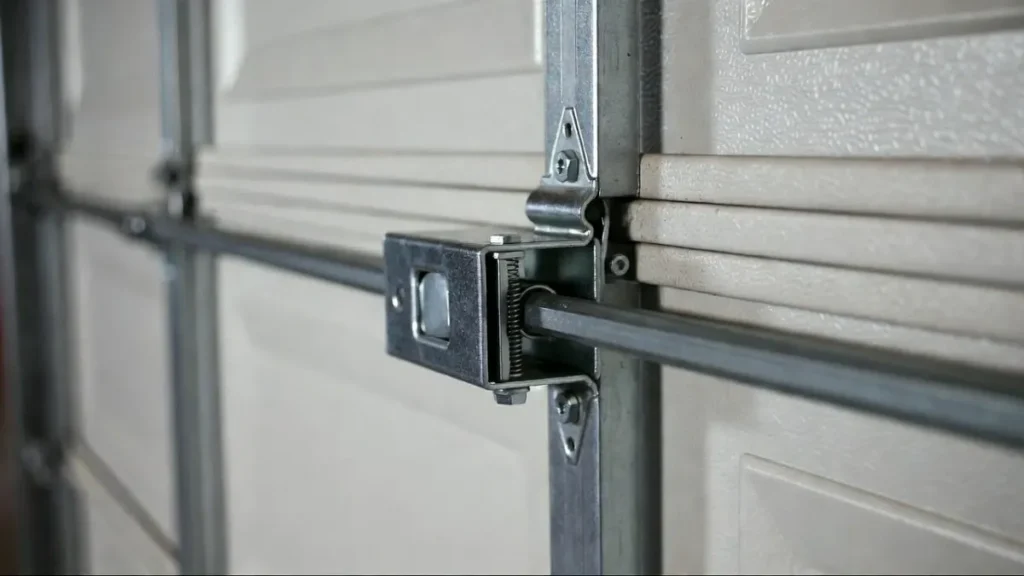
Look for an inside manual slide lock engaged into the track. Also check the bottom area for ice buildup, a raised threshold, or something jammed near the track that could stop movement immediately.
If you recently had a power outage, also confirm the trolley is properly engaged (a disengaged trolley usually makes the opener run without lifting the door).
Step 3: Do the “manual lift test” (best diagnostic)
This is the single most useful test for “opens a few inches then stops.”
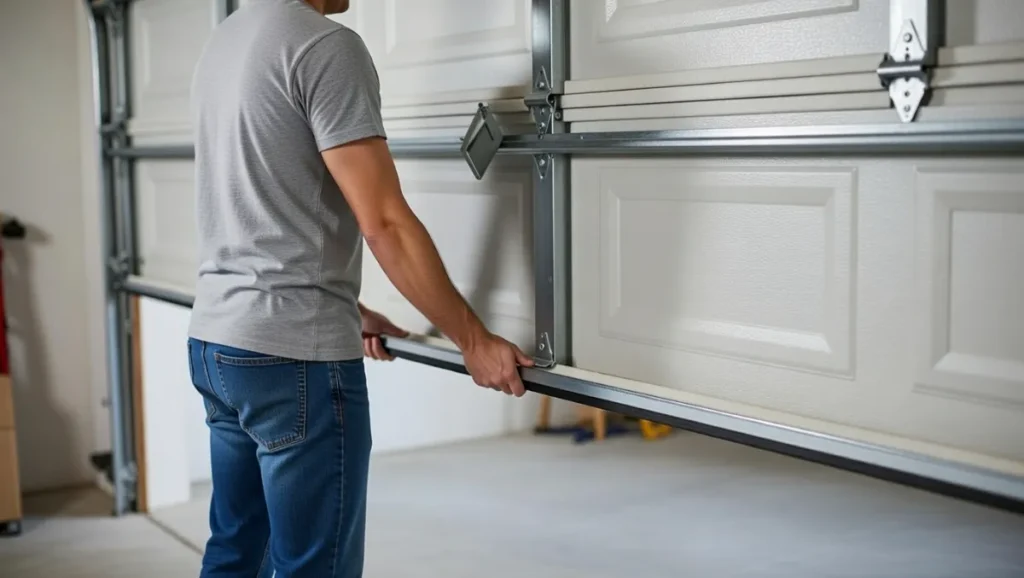
Disengage the opener using the emergency release, then try to lift the door by hand.
If the door feels very heavy, or you can barely lift it, stop right there. A heavy door usually means a spring issue or major hardware resistance. Springs are dangerous—this is a professional job.
If the door lifts but feels rough, jerky, or catches at one spot, you likely have track/roller binding.
If the door lifts smoothly and stays up without fighting you, the door hardware is probably okay, and the problem may be in the opener settings or opener components.
Step 4: If the door is heavy, don’t “force it” (spring warning)
A garage door that only opens a few inches is a classic symptom of a broken spring (or a spring that has lost tension). The opener can lift the door a little, then it gives up.
You might also notice a loud bang earlier, or the door looks uneven. Even if you don’t see obvious damage, the “heavy door” test is enough to justify calling a technician.
This is not the kind of issue you fix by changing settings.
Step 5: If the door binds, do a visual track/roller check
If your manual lift test felt rough, inspect the tracks and rollers visually.
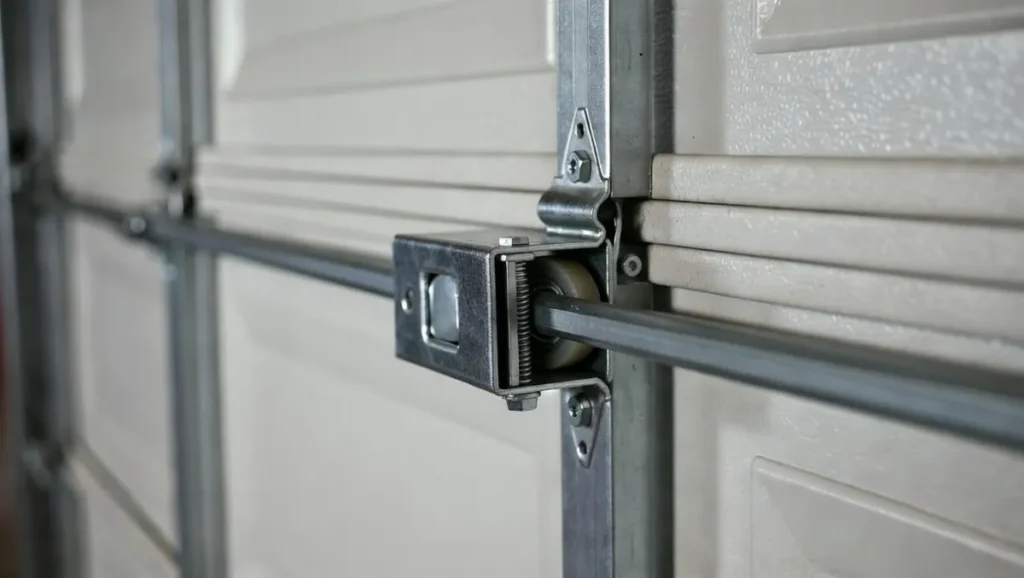
Look for bent track sections, debris buildup, or rollers that look tilted or popped out. Also check whether the door is rubbing hard on one side.
If anything looks off-track, stop and call a pro. A door that’s binding can come off track and create a safety issue.
Step 6: If the door moves smoothly by hand, consider force/travel settings (carefully)
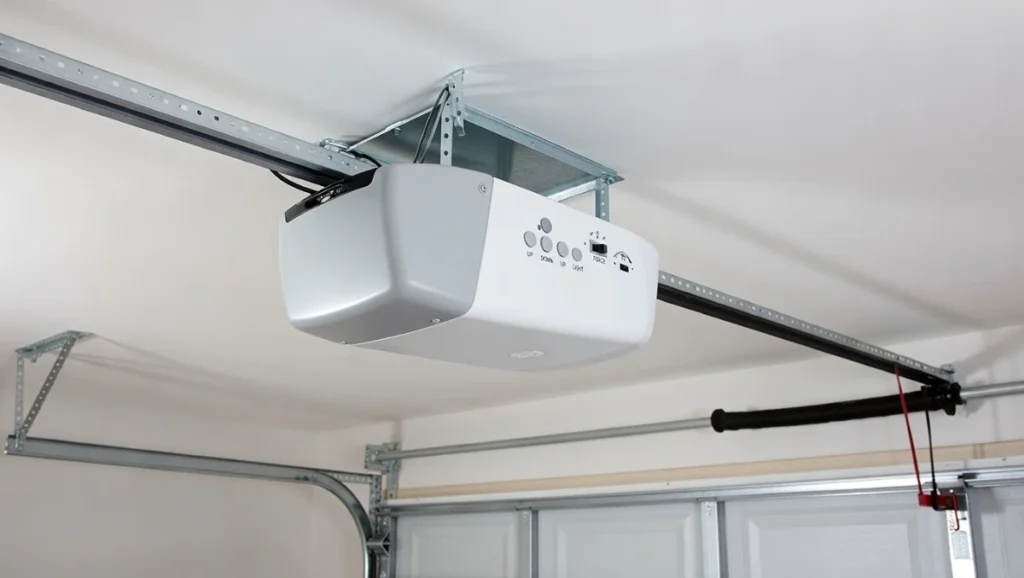
If the door is balanced and moves smoothly, but the opener still stops after a few inches, you may be dealing with opener force/travel settings—or an opener that’s failing to start under load.
Because openers vary, use your manual for your model. Make only tiny adjustments and test each time. Don’t keep increasing force to “power through” a real mechanical problem.
If your opener hums and stops even with a smooth door, that can be a capacitor/motor start issue—better handled by a technician.
Step 7: Sensor issues (less common for opening, but possible)
Safety sensors mainly affect closing, but some systems can still behave oddly if sensors are unstable, wiring is damaged, or the opener logic is throwing warnings.
If you notice the opener light flashing, or you also have closing problems, check your sensor lights and fix those issues too.
When to call a professional
Call a garage door technician if:
- the door is heavy during the manual lift test
- the door binds, jerks, or appears off-track
- the opener hums/clicks repeatedly without lifting
- you’ve confirmed the door is smooth but the opener still won’t lift (possible internal issue)
FAQs
Why does my garage door open a few inches and stop?
Most often because the door is too heavy (spring issue) or binding in the tracks. The opener senses resistance and stops to prevent damage.
Can I fix this by adjusting the opener force?
Only if the door is already balanced and smooth. If the door is heavy or binding, increasing force is risky and can make things worse.
How do I know if it’s a spring problem?
The quickest clue is the manual lift test: if the door is unusually heavy, suspect springs and call a pro.