Garage Door Opens Slowly: Causes and Safe Fixes
A garage door that opens more slowly than usual can be frustrating, especially when you are trying to leave home. You may notice the door moving gradually, stopping partway, making unusual noises, or struggling during the first few inches of travel.
Several problems can cause slow operation, including poor lubrication, worn components, a weak opener, or a door that is difficult to move. The important thing is to identify warning signs before the problem becomes worse.
This guide explains seven possible causes of a slow garage door, the checks you can safely perform, and when professional service is the better option.
Why Does My Garage Door Open Slowly?
A garage door may open slowly because of increased friction, worn hardware, an opener problem, or an issue with the door’s spring system. Cold weather can also affect how smoothly some components operate.
Start by observing what happens when you use the opener. Listen for unusual sounds, watch for jerky movement, and note whether the problem occurs every time or only occasionally.
1. Dry or Worn Garage Door Rollers
Rollers help the door travel along its tracks. If they are worn, damaged, or moving roughly, the door may struggle to open smoothly.
What to check:
- Look for visibly damaged or worn rollers from a safe distance.
- Listen for grinding, squeaking, or scraping sounds.
- Check whether the door moves unevenly or appears to bind.
If your owner’s manual permits routine lubrication, use a lubricant specifically recommended for garage doors and apply it to the approved moving components. Avoid spraying lubricant indiscriminately or lubricating the tracks unless the manufacturer specifically instructs you to do so.
If rollers appear damaged or the door binds, arrange professional service rather than attempting repairs near the spring system.
2. Garage Door Tracks Have Debris or Visible Damage
Dirt, small debris, or a visibly damaged track can interfere with smooth movement. A door that rubs against the track may move slowly or make scraping noises.
With the door stationary, visually inspect the accessible track areas for debris, bends, or anything that appears out of place.
Remove loose debris only where you can do so safely without touching moving parts. Do not loosen track brackets, bend the track back into position, or operate a door that appears to be coming off its track.
Bent tracks or persistent binding require a qualified garage door technician.
3. The Garage Door Needs Routine Lubrication
Moving metal components can become noisy or develop additional friction when routine maintenance is neglected.
Check the maintenance instructions for your particular door and opener. Some systems require periodic lubrication of specific hinges, rollers, or other approved components, while requirements vary by design.
Use the lubricant recommended by the manufacturer. Avoid assuming that every part needs oil or grease.
If lubrication does not improve the movement, the problem may involve worn hardware, door balance, or the opener itself.
4. A Garage Door Spring May Be Worn or Broken
Garage door springs counterbalance the weight of the door. If a spring is damaged or no longer provides the required support, the opener may struggle to lift the door.
Warning signs can include:
- A loud bang followed by difficulty opening the door.
- A visible gap in a torsion spring.
- A door that moves unevenly or seems unusually heavy.
- An opener that strains, hums, or stops during opening.
Stop operating the door if you suspect a spring problem. Do not adjust, loosen, or replace springs, cables, or bottom brackets yourself. These parts are under high tension and can cause serious injuries.
Contact a qualified garage door technician for inspection and repair.
5. The Garage Door Opener May Be Struggling
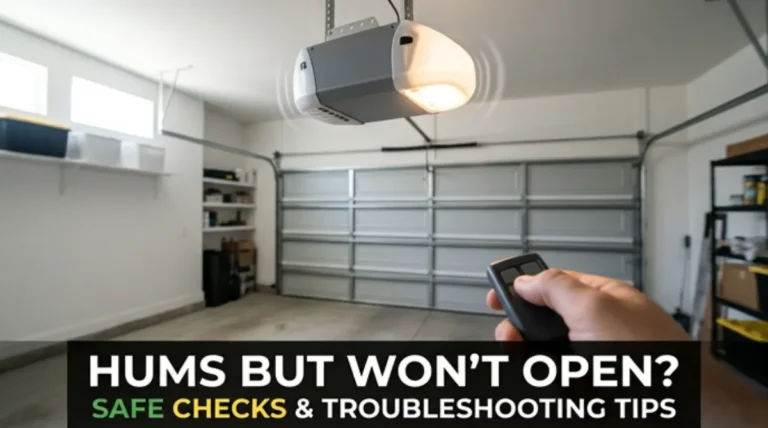
If the door hardware looks normal but the opener moves the door slowly, the opener may have a mechanical, electrical, or model-specific issue.
Pay attention to the motor sound and any diagnostic lights or error codes. Consult the owner’s manual for the meaning of those indicators because patterns differ between manufacturers and models.
Do not increase the opener’s force setting simply to make the door move faster. Force settings are part of the safety system, and increasing them can hide an underlying mechanical problem.
If the opener repeatedly strains, overheats, or stops, discontinue use and contact a technician.
6. Cold Weather May Be Affecting Door Movement
In colder climates, lubricant may become less effective, and some components may move less smoothly. Moisture or ice around the bottom seal can also interfere with movement.
Inspect the visible door opening for ice or obstructions without putting your hands near moving sections. Never force a frozen door to move with the opener.
Use only manufacturer-approved maintenance products and follow the door manual’s cold-weather guidance. If the door remains difficult to operate after visible obstructions are addressed, arrange an inspection.
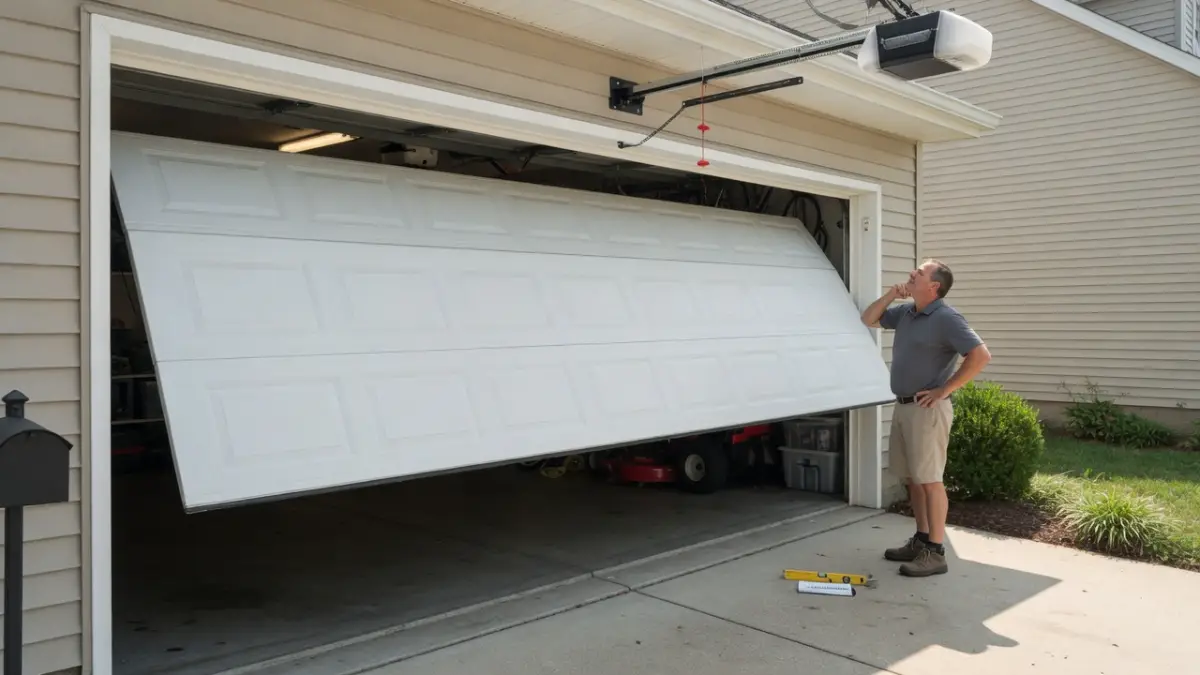
7. The Door May Be Out of Balance
A properly functioning opener is designed to move a correctly installed and balanced garage door. If the door becomes difficult to move, sticks, or travels unevenly, the underlying problem may be mechanical rather than electronic.
Do not disconnect the opener and attempt a manual balance test unless you are following the manufacturer’s instructions and can do so safely. Never disconnect a door while it is open, and never force a heavy door by hand.
If the door looks crooked, feels unusually heavy, or does not travel smoothly, stop using it and call a professional.
When Should You Call a Garage Door Technician?
Professional service is recommended when the door:
- Opens slowly despite appropriate routine maintenance.
- Makes grinding, popping, or straining noises.
- Stops partway or moves unevenly.
- Has a suspected broken spring, damaged cable, or bent track.
- Causes the opener to overheat or repeatedly stop.
A technician can inspect the door’s balance, springs, rollers, tracks, and opener to identify the actual cause instead of treating only the symptom.
Frequently Asked Questions
Is it safe to keep using a slow garage door?
Not always. A small maintenance issue may be manageable, but slow movement can also indicate a serious mechanical problem. Stop using the door if it strains, binds, moves unevenly, or shows signs of spring or cable damage.
Can lubrication make a garage door open faster?
It may help if friction from components that require routine lubrication is contributing to the problem. However, lubrication will not repair a broken spring, damaged roller, bent track, or failing opener.
Why does my garage door open slowly but close normally?
The opener may be experiencing a problem that appears primarily during lifting, when the door’s weight and balance place different demands on the system. A spring or mechanical issue is one possibility, so do not assume the opener simply needs more force.
Should I adjust the opener’s force settings?
Do not increase force settings just to compensate for slow movement. Follow the manufacturer’s troubleshooting instructions and arrange professional service if the door is difficult to lift or does not operate normally.
Final Thoughts
When a garage door opens slowly, begin with safe visual checks and the routine maintenance recommended for your model. Look for debris, unusual noises, visible damage, and signs that the opener is struggling.
If the problem continues or you suspect a spring, cable, balance, or track issue, stop operating the door and contact a qualified technician. Correctly identifying the cause is safer than forcing the opener to work harder.
A well-maintained garage door should travel smoothly without unusual strain, binding, or jerky movement.