Garage Door Opener Grinding Noise: Causes and Safe Checks
Garage Door Opener Grinding Noise: A garage door opener should make some noise while operating, but a new grinding sound deserves attention. You might hear it when the door starts moving, while it travels along the tracks, or just before the opener stops. The sound can come from the opener’s drive system, a moving door component, or a door that is binding under load.
The important thing is to identify when the noise happens before attempting a repair. A grinding sound does not automatically mean the opener motor has failed, and replacing parts without checking the cause can waste money.
This guide explains what to observe, which basic checks homeowners can perform safely, and when to stop using the door.
1. Notice When the Grinding Noise Occurs
Start by observing the door from a safe distance. Keep your hands, tools, and clothing away from moving parts.
Grinding begins as soon as the opener starts: The noise may be coming from the opener’s internal drive mechanism, gear assembly, or another component under load.
Grinding continues throughout the door’s movement: The door may be binding, or a roller, hinge, or track-related component may be creating friction.
Grinding happens near the floor or ceiling: The noise may be related to a particular part of the door’s travel. However, sound can travel through the metal panels and rails, so the apparent location is not always the true source.
The opener grinds but the door barely moves: Stop operating it. A drive component may be slipping or damaged, or the door may be difficult to move because of a mechanical problem.
These clues help narrow the possibilities, but they do not confirm which part has failed.
2. Check Whether the Door Is Obstructed
Before inspecting the opener, look at the garage door’s path.
Small objects, debris, or a displaced item near the tracks can interfere with movement. Check for visible obstructions around the floor, track area, and door opening. Also look for anything that appears bent, loose, or out of position.
Do not remove track brackets or try to bend a track back into place. Tracks help guide a heavy door, and changing their alignment can make the situation more dangerous.
If the door appears crooked, one side moves differently from the other, or a roller has come out of its track, stop using the opener and contact a qualified garage door technician.
3. Inspect the Opener Rail and Drive System
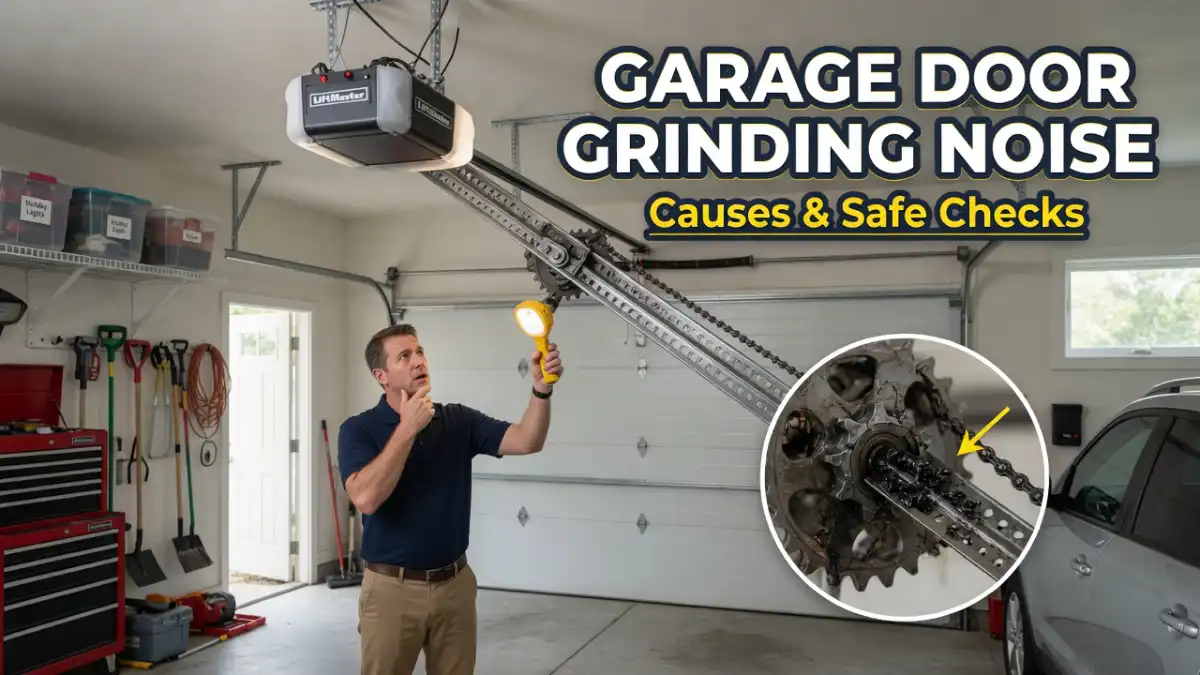
Garage door openers commonly use a chain, belt, or screw-drive mechanism. The correct inspection depends on the model.
With the opener switched off and the door fully stationary, look for obvious signs of trouble that can be seen without removing covers. These may include a visibly loose chain, damaged belt material, unusual debris around the rail, or a part that appears out of position.
Do not reach into the drive assembly while it is powered. Avoid removing the motor cover or touching internal gears unless the manufacturer’s instructions specifically authorize the procedure for a qualified person.
A grinding sound from inside the motor housing may indicate internal wear, but the sound alone cannot establish whether the gears, motor, or another component is responsible.
4. Check for Loose or Damaged Door Hardware
A garage door has hinges, rollers, brackets, and fasteners that experience repeated movement. A visibly loose component may vibrate or create an unusual noise during operation.
From a safe position, look for missing fasteners, damaged hinges, cracked roller wheels, or hardware that appears out of place. Do not tighten hardware that supports a spring system or carries significant door tension.
Never loosen the bottom brackets, adjust torsion springs, or attempt to repair frayed lift cables yourself. These parts can be under dangerous tension even when the opener is disconnected.
If you notice a broken spring, damaged cable, or a door that is hanging unevenly, leave it alone and arrange professional service.
5. Should You Lubricate the Garage Door?
Lubrication may help when the actual problem is friction at a component that the manufacturer permits homeowners to lubricate. However, lubricant is not a universal solution for grinding noises.
Check the opener and door manufacturer’s maintenance instructions first. Use only the recommended lubricant and apply it to the specified components.
Do not spray lubricant indiscriminately inside the motor housing, onto electrical components, or onto a belt or other drive surface unless the manufacturer explicitly instructs you to do so. Lubrication will not repair stripped gears, a damaged belt, a bent track, or a failing bearing.
If the grinding continues after approved routine maintenance, further diagnosis is needed.
6. When Should You Stop Using the Opener?
Stop operating the door if you hear loud or worsening grinding, see the door jerk or tilt, notice a cable hanging loose, or suspect a broken spring. Do not repeatedly press the remote to see whether the problem disappears. Repeated operation can worsen damage.
If the door is stuck open, keep people and pets away from the opening and arrange professional assistance. Do not stand beneath a partially open door or try to force it closed.
If you smell burning, see smoke, or notice electrical damage, disconnect power only if you can do so safely and contact an appropriate professional.
7. What to Tell a Garage Door Technician
A few observations can make diagnosis more efficient. Note whether the noise occurs during opening, closing, or both. Record whether the door moves normally, moves slowly, jerks, or stops. Also note the opener’s brand and model, if available.
A short video recorded from a safe distance may help demonstrate the sound, but do not operate a visibly damaged door just to record it.
Ask the technician to inspect both the opener’s drive system and the door’s mechanical movement. This helps avoid assuming that the motor is responsible before the door itself has been checked.
Frequently Asked Questions
Can I keep using a garage door opener that makes a grinding noise?
It is better to stop if the noise is new, loud, worsening, or accompanied by jerking or unusual movement. Continuing to operate it may increase the damage.
Does a grinding noise always mean the opener gears are stripped?
No. The sound may come from the drive mechanism, door hardware, or a door that is binding. A proper inspection is needed to identify the cause.
Is grinding the same as squeaking?
Not necessarily. Squeaking often sounds like a high-pitched friction noise, while grinding can sound rough or harsh. Sound descriptions vary, so the timing and movement of the door are also important clues.
Should I replace the garage door opener immediately?
Not without a diagnosis. A technician can determine whether the problem involves the opener, the door hardware, or both, and explain the appropriate repair options.
Final Thoughts
A grinding garage door opener is a symptom, not a diagnosis. Observe when the sound occurs, check for visible obstructions, and inspect accessible components only when the system is safely powered off and stationary. Avoid internal motor repairs, spring adjustments, cable work, and track realignment unless handled by a qualified professional.
Finding the source of the noise before replacing parts can help you make a safer and more informed repair decision.