Garage Door Won’t Close at Night (But Works During the Day): Causes and Fixes
If your garage door closes normally during the day but refuses to close at night, you’re dealing with a “pattern problem.” That’s actually good news, because patterns usually point to a specific cause—often the safety sensors, light/glare, moisture, or temperature-related resistance.
This guide will help you figure out what’s happening without guessing or doing risky repairs.
Safety disclaimer: This is safe troubleshooting only. Do not DIY anything involving garage door springs, cables, or hardware under tension. If the door is off-track, very heavy, or binding hard, call a professional.
Quick answer: why it happens mostly at night
Night-only closing problems are most commonly caused by:
- Safety sensor beam issues (alignment, dirty lens, loose bracket)
- Headlights or bright garage lighting creating glare on the receiver sensor
- Condensation/fog on the sensor lens (even a thin film can weaken the beam)
- Insects/spider webs around the sensors (very common at night)
- Cold/ice increasing resistance near the floor or tracks
- Sometimes: remote battery getting weak (cold makes weak batteries worse)
Step 1: First, confirm what “won’t close” means
Try closing the door from inside using the wall button and observe what happens:
- If the door doesn’t move at all, it could be a command/remote issue, lock mode, or opener issue.
- If the door starts closing then reverses, it’s usually a safety sensor/obstruction/resistance issue.
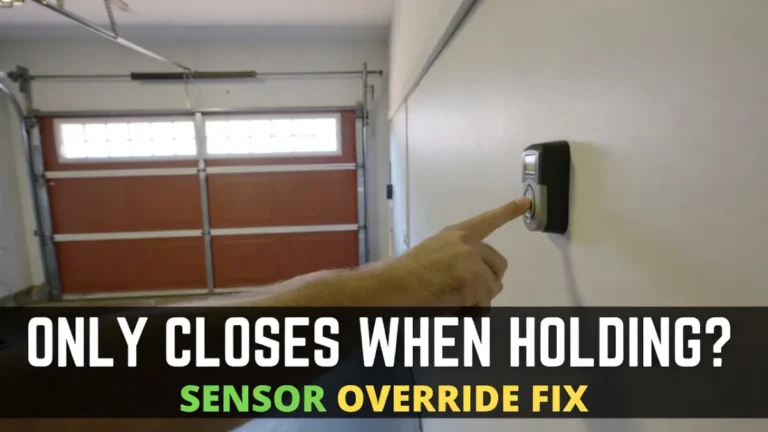
- If the door closes only when you hold the wall button, that strongly points to sensor override behavior.
(You already have a dedicated post for hold-to-close override—link it later.)
Step 2: Look at the safety sensor lights (10-second check)
Go to the sensors near the bottom of the tracks and check the indicator lights.
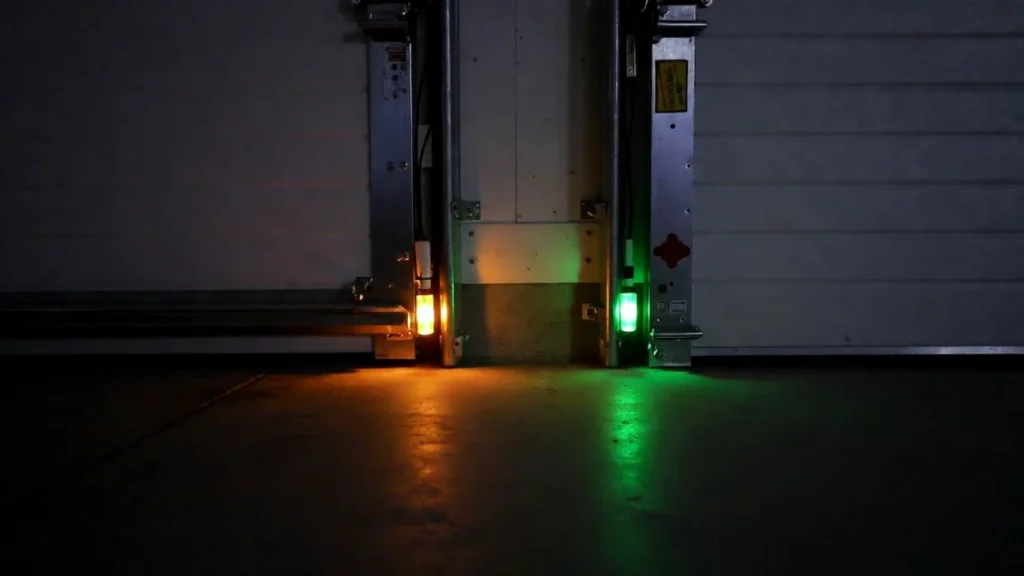
- Solid/steady lights usually mean the beam is OK.
- Blinking/off lights usually mean the beam is not being detected reliably.
If you see blinking or off lights, these posts match perfectly:
- Blinking green: https://garageopenerfix.com/garage-door-safety-sensor-blinking-green/
- Blinking amber/yellow: (your amber post)
- Both sensor lights off: (your “lights off” post)
Step 3: Night-specific cause #1 — headlights / bright glare
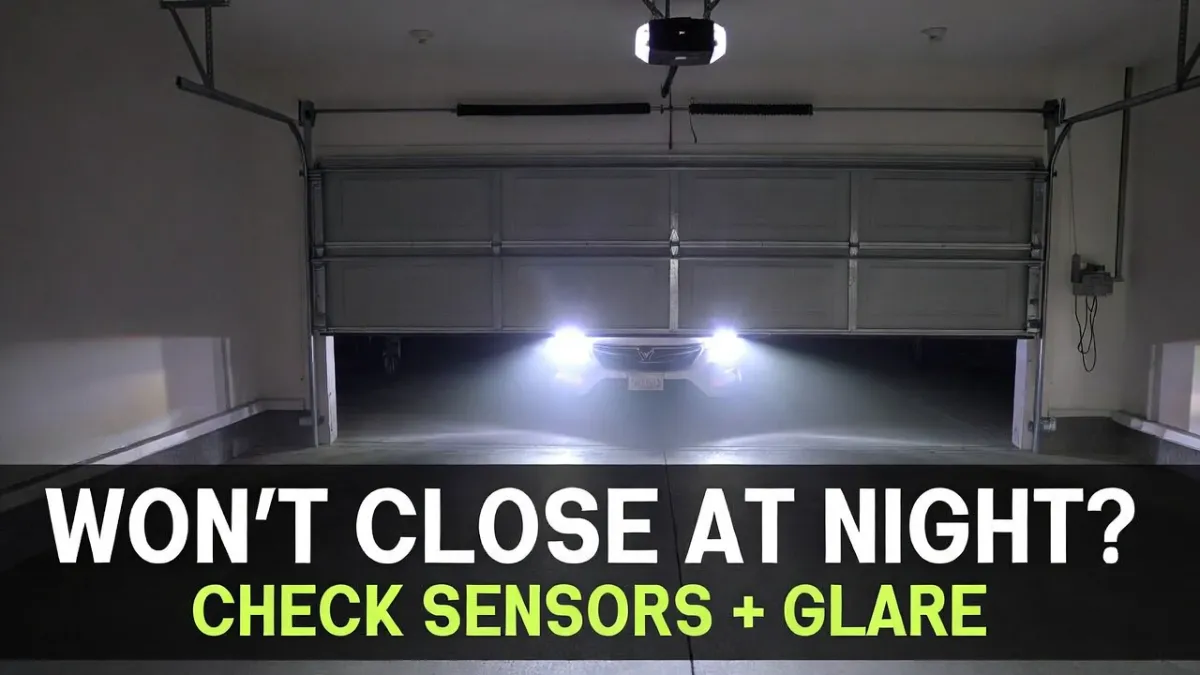
At night, your car headlights (or bright outdoor lights) can shine directly into the sensor path. That glare can confuse the receiving sensor the same way sunlight does—just with a different light source.
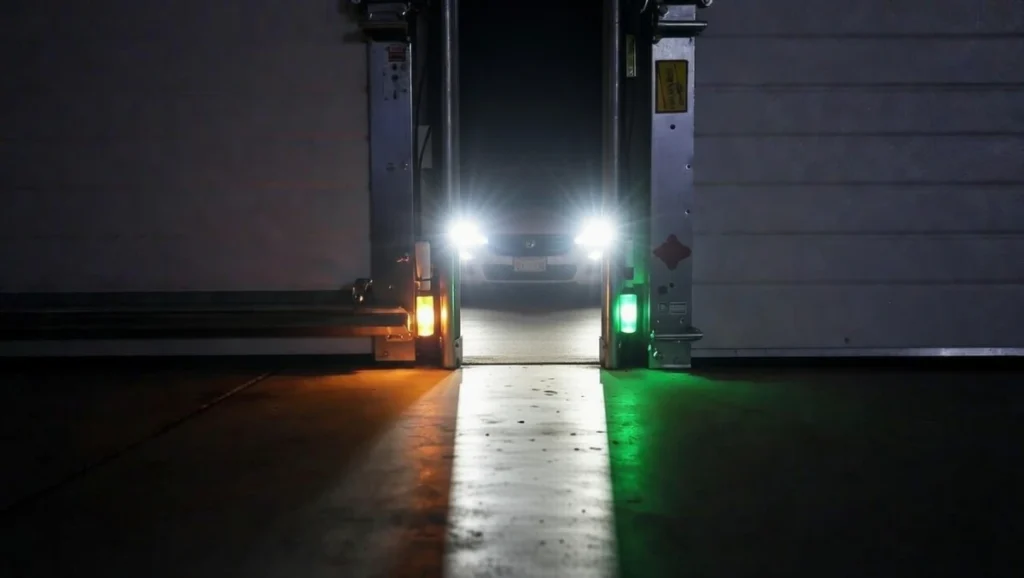
Clues:
- The problem happens when you pull in with headlights pointing toward the garage.
- It closes fine after you turn the car off or reposition.
Try this:
- Turn off headlights and try closing again.
- If it closes, glare is likely the cause.
A simple visor/shade above the receiver sensor can help (without blocking the lens).
Step 4: Night-specific cause #2 — condensation on the sensor lenses
Night air + temperature change can create a light film of moisture on lenses. It can look “clean,” but still weaken the beam.
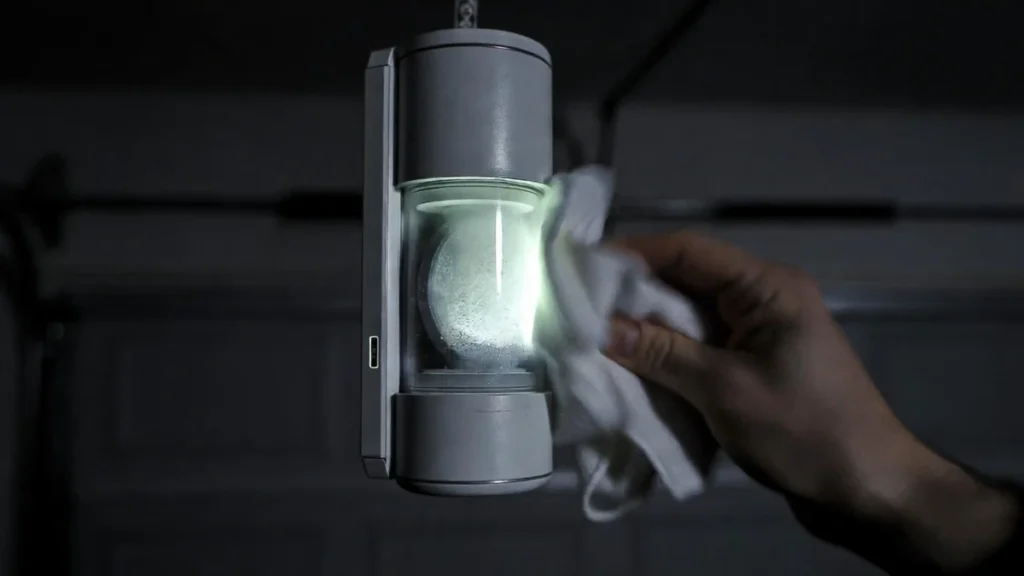
What to do:
- Gently wipe both sensor lenses with a dry microfiber cloth.
- Wait 30 seconds and try closing again.
If wiping fixes it temporarily and it returns nightly, consider improving airflow or adding a small visor to reduce moisture exposure.
Step 5: Night-specific cause #3 — insects and spider webs
Nighttime attracts insects, and insects attract spider webs—right where sensors sit (near the floor corners).
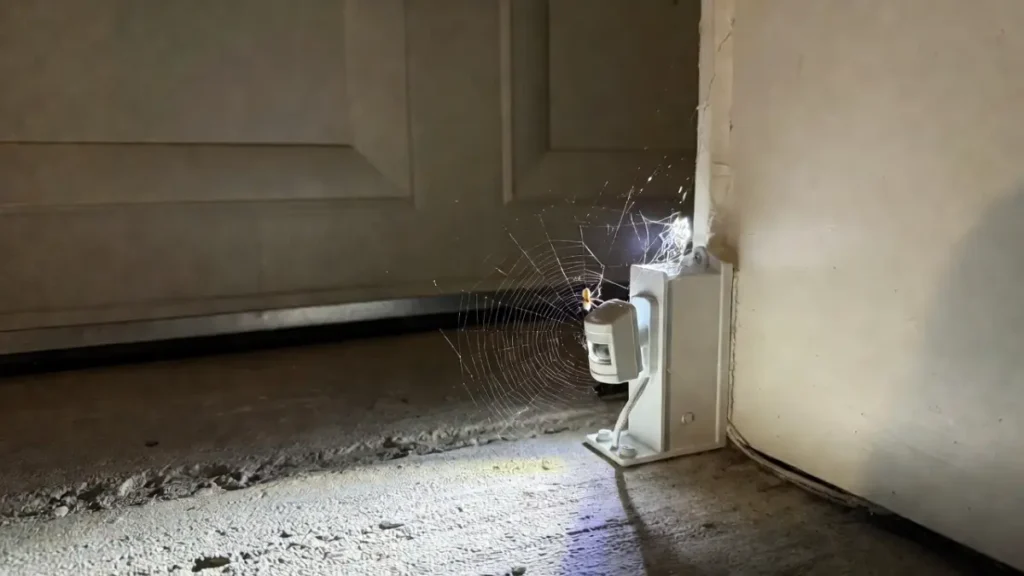
Even a thin web or a bug crawling across the lens can interrupt the beam.
What to do:
- Check for spider webs around the sensor “eyes.”
- Clean the sensor area and the immediate beam path near the floor.
Step 6: Temperature/cold issues — resistance near the floor
If it’s cold outside, the door can experience more resistance near the bottom:
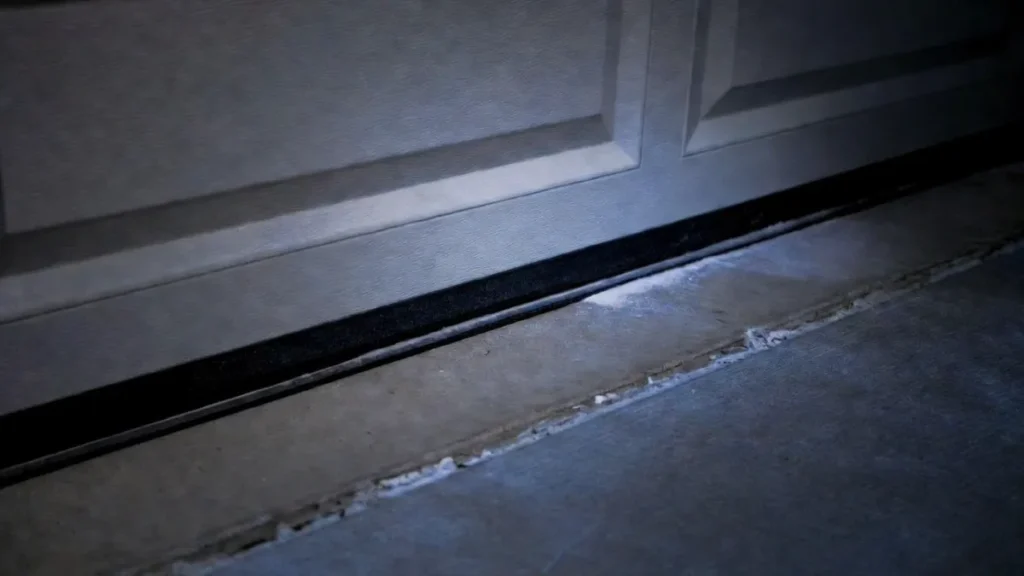
- the bottom seal may stick
- debris/ice can build up
- the floor can be uneven or swollen with moisture
Clue: The door touches the floor and then pops back up, or it struggles near the bottom.
Clear the floor line and check for ice/debris. If it still reverses with solid sensor lights, your “sensor vs travel limits” post is the right next step.
Step 7: If it fails only from the remote at night, check the remote battery
Sometimes the door closes fine using the wall button, but the remote becomes unreliable at night (especially in cold weather). Weak batteries perform worse in the cold.
Try a fresh remote battery and test again. If range is suddenly short, your “remote range suddenly short” post fits well here.
When to call a pro
Call a garage door technician if:
- the door is heavy by hand or feels unsafe
- the door is off-track or binding hard
- sensors won’t stay steady after cleaning/alignment
- the door reverses aggressively and you can’t find any clear cause
FAQs
Why does my garage door work during the day but not at night?
Most often it’s night-related conditions: glare from headlights/lighting, condensation on sensor lenses, insects/webs, or cold/ice resistance.
If the sensor lights are solid, can it still be sensors?
It’s less likely, but it can still be intermittent (loose bracket, vibration, occasional glare, moisture film). If lights stay solid, check resistance/limits next.
Can I keep closing it by holding the wall button?
Many openers allow “hold-to-close” as a supervised override, but it’s not a real fix. Restore normal sensor operation as soon as possible.