Garage Door Keypad Not Working After Rain: Moisture Issues and Fixes (Drying, Battery, Replacement)
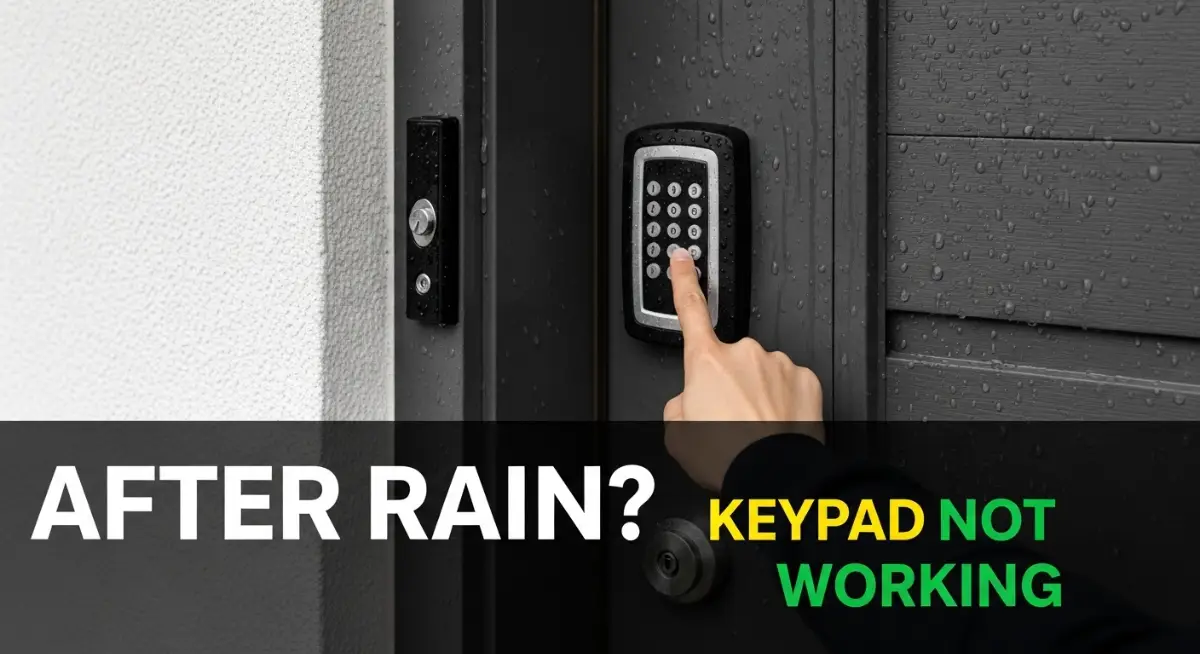
Garage Door Keypad Not Working After Rain: If your garage door keypad works normally most days but suddenly stops working after a rainy day, moisture is a very likely cause. Outdoor keypads sit on the door frame, take wind-driven rain, and often get condensation inside the cover—even if they look “dry” on the outside.
The good news is that many rain-related keypad problems are temporary and fixable with careful drying and a fresh battery. This guide explains what to do and what to avoid.
Safety note: This is keypad troubleshooting only. You are not touching garage door springs/cables or anything under tension.
Quick answer: why rain affects a garage keypad
Rain and humidity can cause keypad failure in a few ways. Moisture can create a thin film on contacts inside the battery compartment, reducing voltage. It can also make buttons sticky or cause the keypad to “ghost press” and lock itself out. In some cases, water gets inside the keypad housing and slowly corrodes the internal board over time.
That’s why some keypads fail right after rain, then start working again a day later.
Step 1: Confirm the door still works from inside (wall button test)
Before focusing on the keypad, check the wall button inside the garage.
If the wall button opens the door normally, your opener and door are likely fine. The keypad is the problem. If the wall button also fails, troubleshoot opener power issues first (GFCI/outlet).
This step keeps you from chasing the wrong problem.
Step 2: Check for a temporary lockout (rain can trigger random input)
If moisture gets under the button membrane, the keypad may act like a key is being held down. Some keypads respond by locking out briefly or blinking.
If your keypad is blinking rapidly or acting “weird,” wait 60–120 seconds without pressing anything, then try again. If it suddenly works after a short wait, it may have been a temporary lockout.
Step 3: Dry the keypad carefully (do it the right way)
If you suspect moisture, the safest approach is gentle drying.
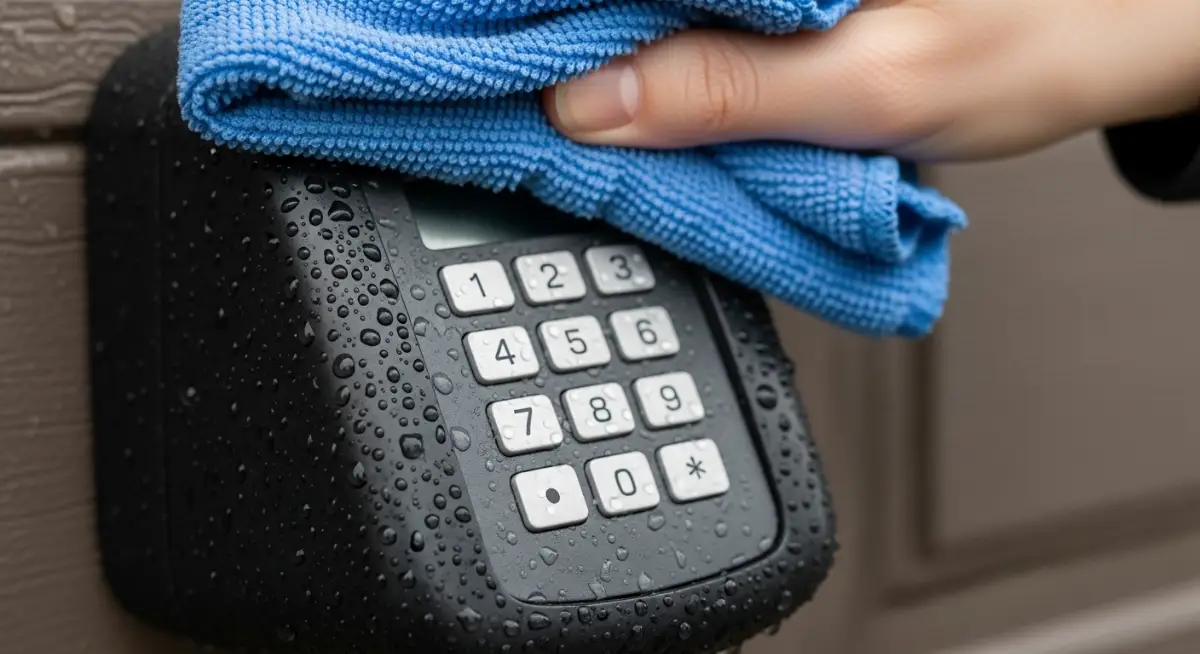
Open the keypad cover (if it has one), then wipe the surface dry. If you can access the battery compartment, open it and check for water droplets or dampness. Remove the battery and let the compartment air-dry for several minutes.
Avoid aggressive heat. Don’t use a heat gun or hold a hair dryer inches away—too much heat can warp plastic and damage seals. If you use a hair dryer, use low heat from a safe distance.
Step 4: Replace the battery (moisture + weak battery = failure)
Even if your battery was “fine,” moisture can reduce contact quality and push a weak battery over the edge.
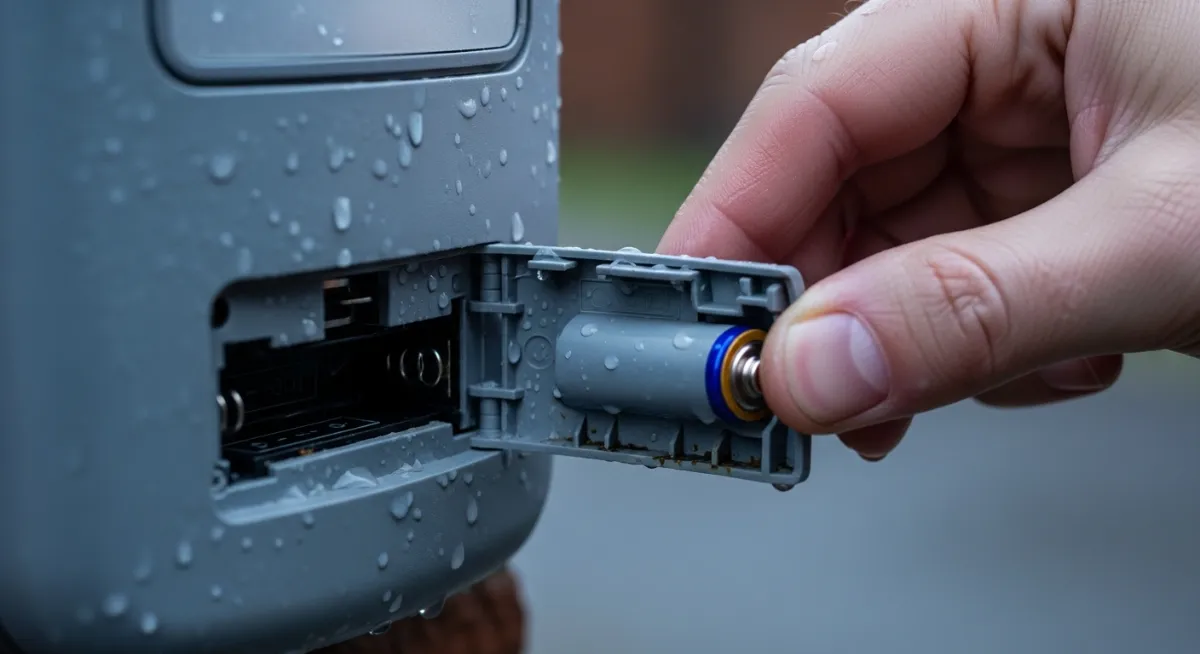
Put in a fresh, good-quality battery. Also check the metal contacts for any white/green residue (early corrosion). If you see corrosion, clean gently with a dry cotton swab. If the corrosion is heavy, replacement is usually the smarter move.
Then test the keypad again.
Step 5: Check the keypad seal/cover and mounting location
Rain problems often repeat because water keeps getting in.
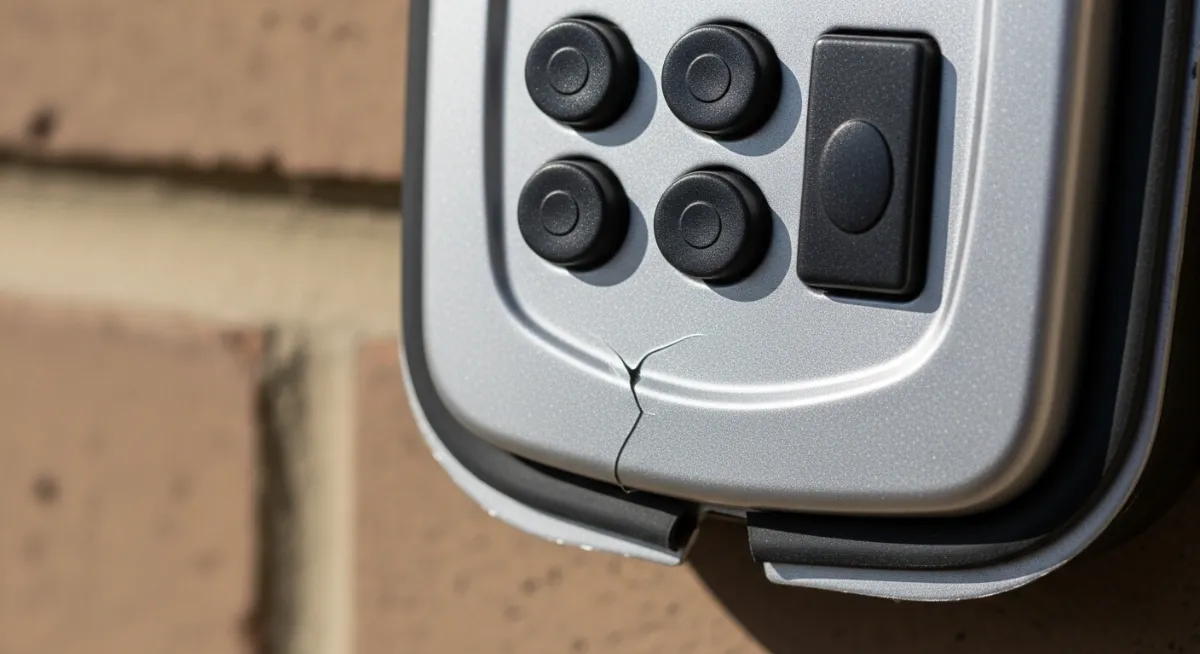
Look for:
- cracked keypad cover
- missing gasket or loose cover fit
- keypad mounted in a spot that gets direct runoff
If the keypad cover doesn’t close firmly, it’s basically inviting moisture in. Sometimes simply replacing the cover (or the keypad) solves “only after rain” failures permanently.
Step 6: If it still won’t work, reprogram it (pairing can get unstable)
This isn’t the most common rain fix, but if the keypad powers up and still won’t open the door—even after drying and a new battery—reprogramming is worth trying.
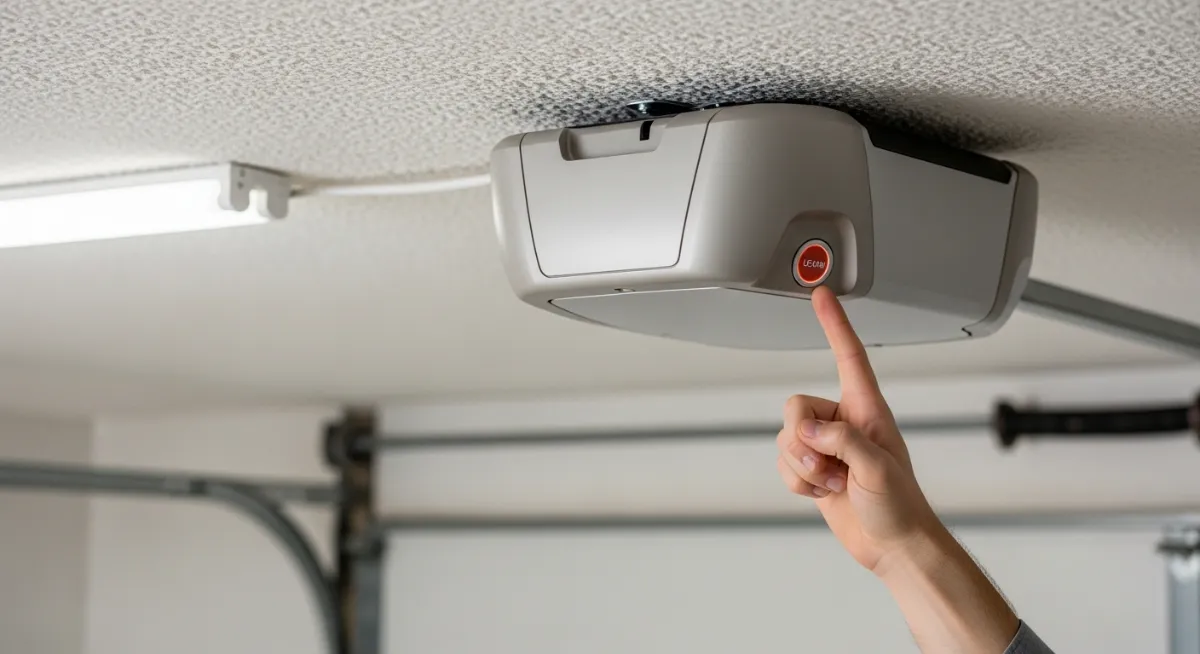
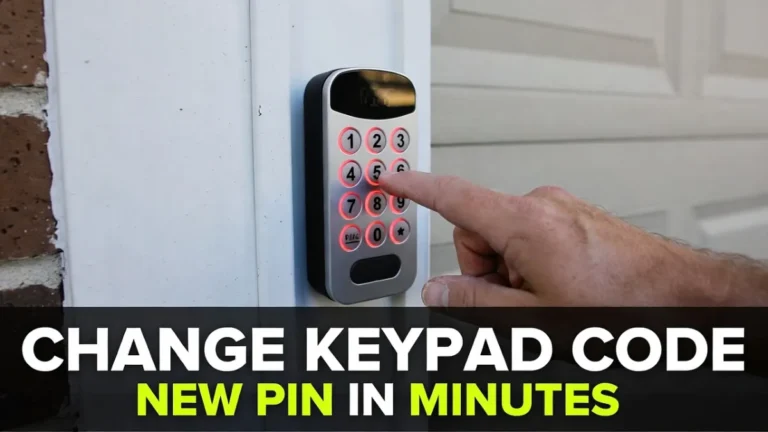
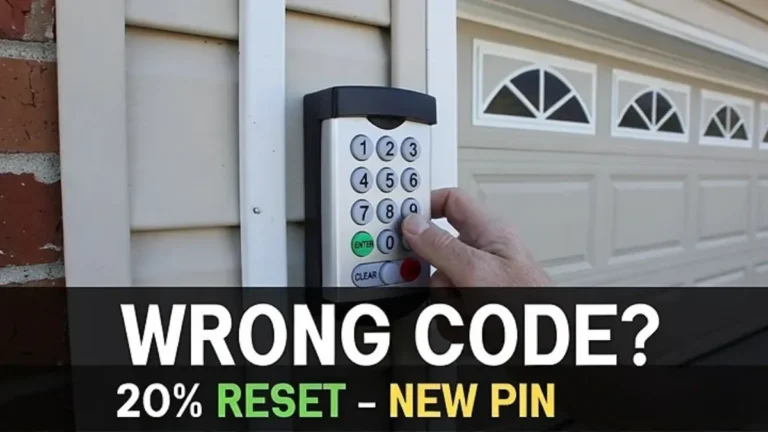
Most systems program through the opener’s Learn button: press Learn, enter a new PIN on the keypad, then press Enter to save. Your “change keypad code” post is a perfect internal link here.
When replacement is the best option
If your keypad fails after every rainstorm, it may already have internal moisture damage. At that point, you’ll see repeated symptoms like blinking, inconsistent button response, or total failure until it dries.
Replacement is usually the best solution when:
- the keypad has visible corrosion inside
- buttons are inconsistent even when dry
- the cover/gasket is cracked
- failures repeat after every storm
A newer keypad with better sealing is often cheaper than repeated troubleshooting time.
FAQs
Why does my garage keypad stop working after rain?
Moisture can affect battery contacts, button membranes, and internal electronics. It can also trigger temporary lockouts.
Can I spray WD‑40 or cleaner into the keypad?
No. Sprays can make moisture problems worse and attract dirt. Stick to gentle drying and battery replacement.
Should I replace the keypad if it works again the next day?
Not necessarily. But if it repeats after every rain, replacement is often the permanent fix.