Garage Door Opener Hums But Door Won’t Open: Causes and Safe Checks (Capacitor vs Stuck Door)
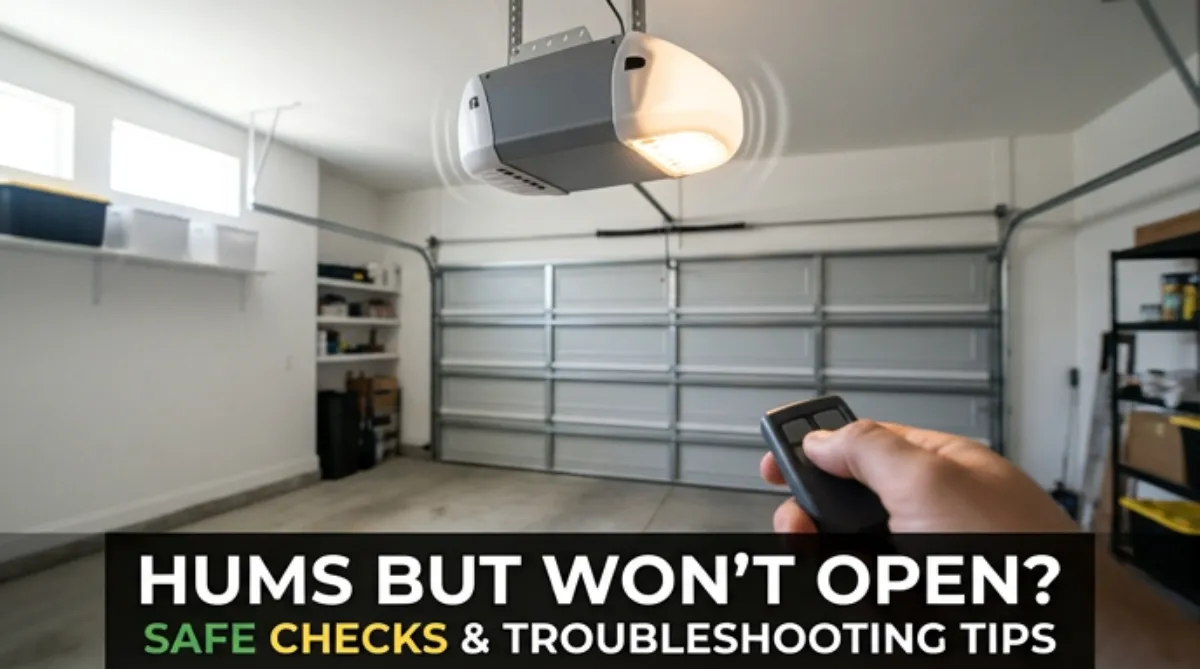
Garage Door Opener Hums But Door Won’t Open: If you press the remote or wall button and your garage door opener hums—but the door doesn’t move—your opener is basically telling you it’s trying to start, but something is preventing motion.
This is a different symptom than “won’t close” sensor issues, and it’s often related to door weight/resistance, a disengaged trolley, or an opener component like a capacitor.
The key is to diagnose it safely, because forcing a heavy or stuck door can damage the opener—or worse, create a safety hazard.
Safety warning: Do not DIY garage door springs, cables, or tension hardware. If the door feels unusually heavy, stop and call a garage door professional.
Quick answer: what the humming usually means
A humming opener commonly points to one of these situations:
- The door is stuck or binding (tracks, rollers, ice, bottom seal, lock engaged)
- The door is too heavy (often spring-related) and the opener can’t lift it
- The trolley/carriage is disengaged or not pulling the door correctly
- The opener’s start capacitor is weak (common on some older units)
- Less common: motor/gear issues or internal opener failure
You can narrow this down quickly with a couple safe checks.
Step 1: Stop pressing the button repeatedly
If the opener hums, don’t keep hitting the remote over and over. Repeated attempts can overheat the motor or worsen a failing part. Press once, observe, then troubleshoot.
Step 2: Try the wall button (not just the remote)
Use the wall button to confirm the opener is receiving the command reliably. If it hums from both the wall button and the remote, you’re dealing with an opener/door issue—not a remote issue.
Step 3: Check for a manual door lock (easy to miss)
Some garage doors have an interior slide lock that can block movement. If the lock is engaged, the opener may hum/strain but the door won’t lift.
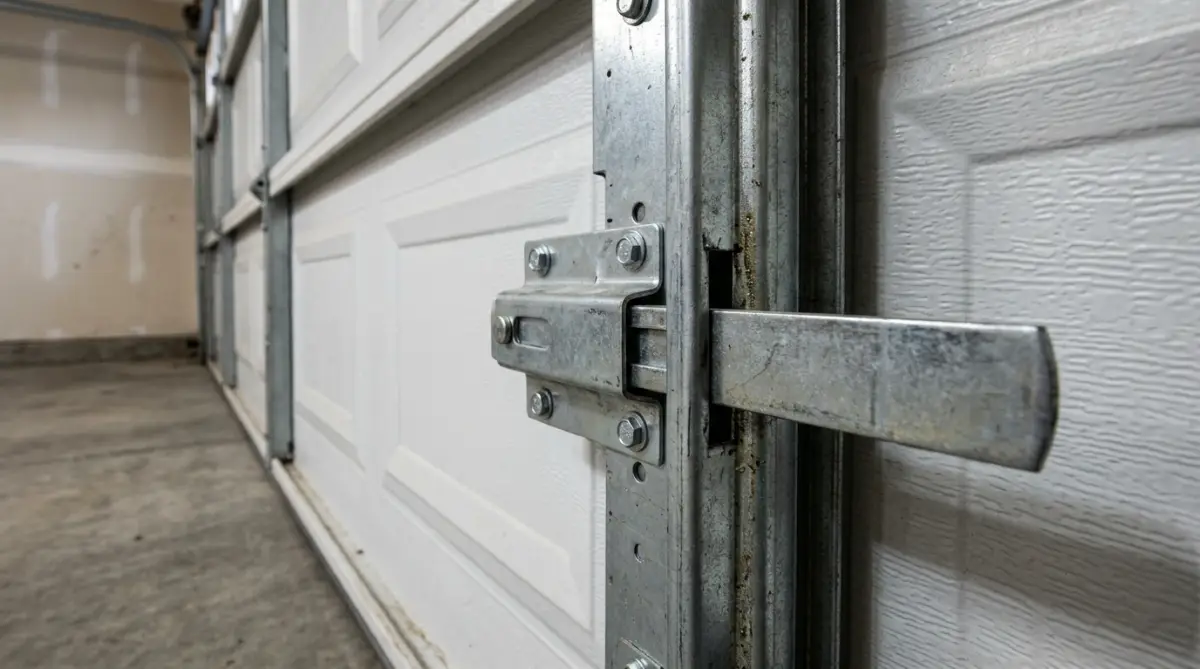
Look for a metal bar that slides into the track. Disengage it and test again.
Step 4: Do the “manual lift test” (this is the most important diagnostic)
This one test tells you whether the problem is the door or the opener.
First, pull the emergency release to disconnect the door from the opener (only when the door is fully closed and stable). Then try lifting the door by hand.
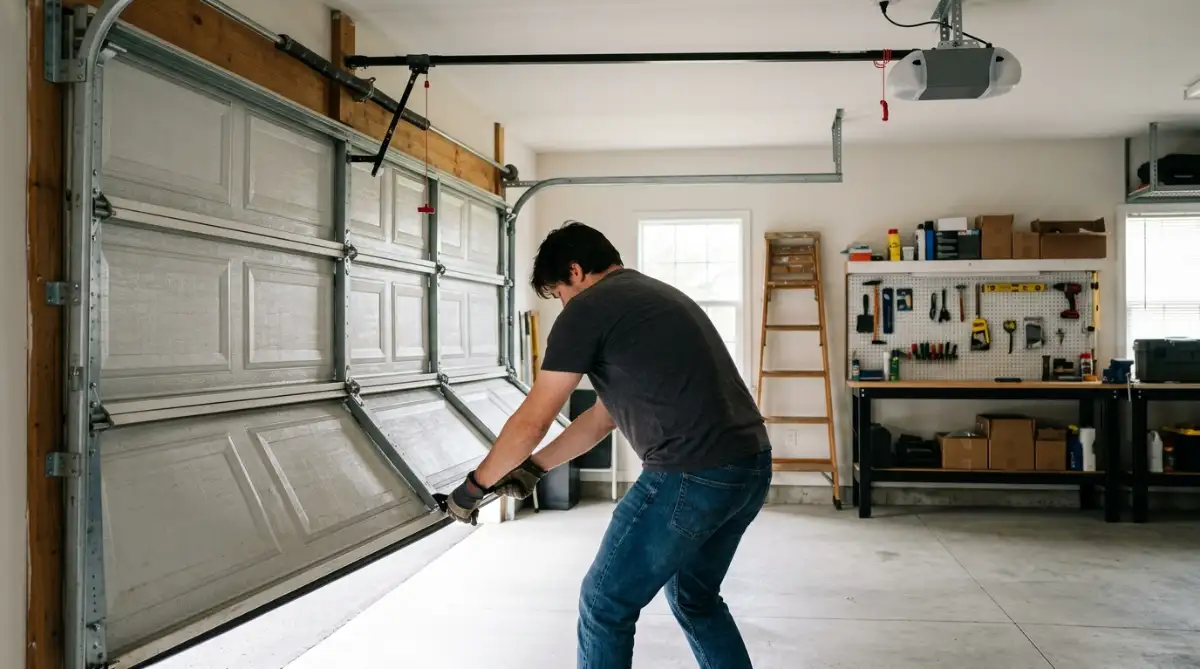
Here’s how to interpret the result:
If the door feels very heavy or you can barely lift it, stop immediately. A heavy door often indicates a spring issue, and springs are not DIY. In this case, the opener humming is a symptom—not the root problem.
If the door lifts but feels rough, jerky, or catches at a certain spot, you likely have binding in the track/rollers, or something is physically obstructing movement.
If the door lifts smoothly and stays balanced, the door hardware is probably okay. That’s when an opener-side issue (like a capacitor) becomes more likely.
Step 5: Check for obvious binding (tracks, rollers, ice, bottom seal)
If the manual lift felt rough or the door barely moved, look for simple resistance causes:
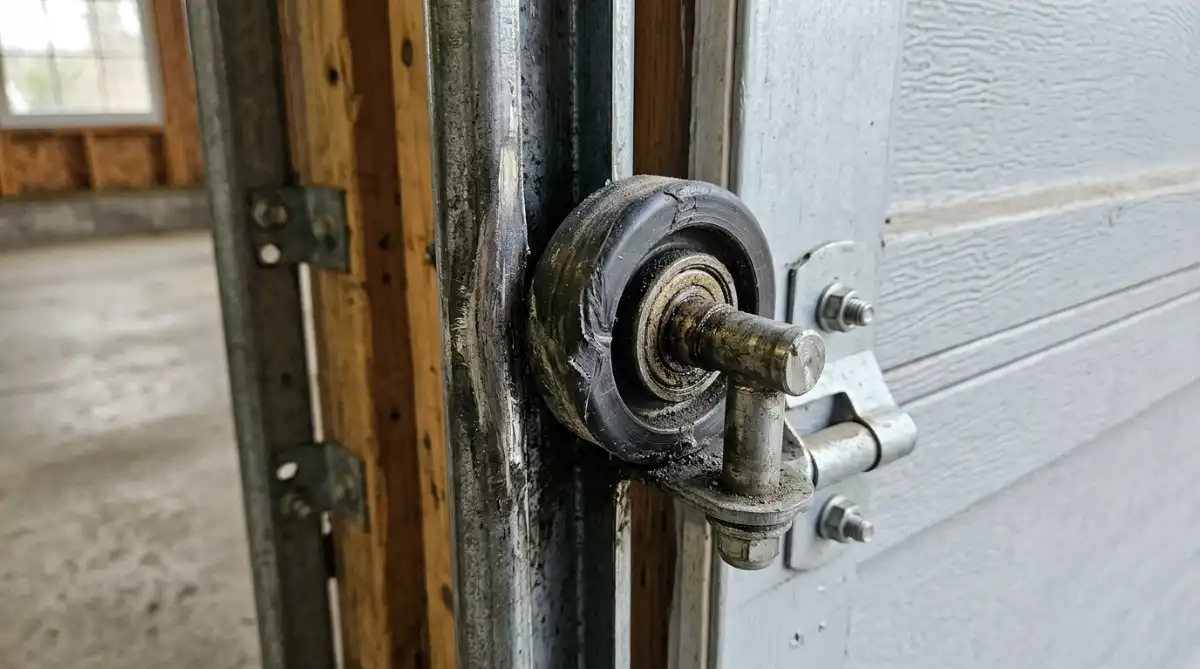
- debris in the track
- a roller that looks tilted or jammed
- a bent track section
- ice or a stuck bottom seal at the floor line (cold-weather issue)
If the door looks off-track or severely crooked, stop and call a pro. That’s a safety issue.
Step 6: Confirm the trolley/carriage is actually engaged
Sometimes the opener hums/runs but isn’t pulling the door correctly because the trolley is disengaged or not connected properly.
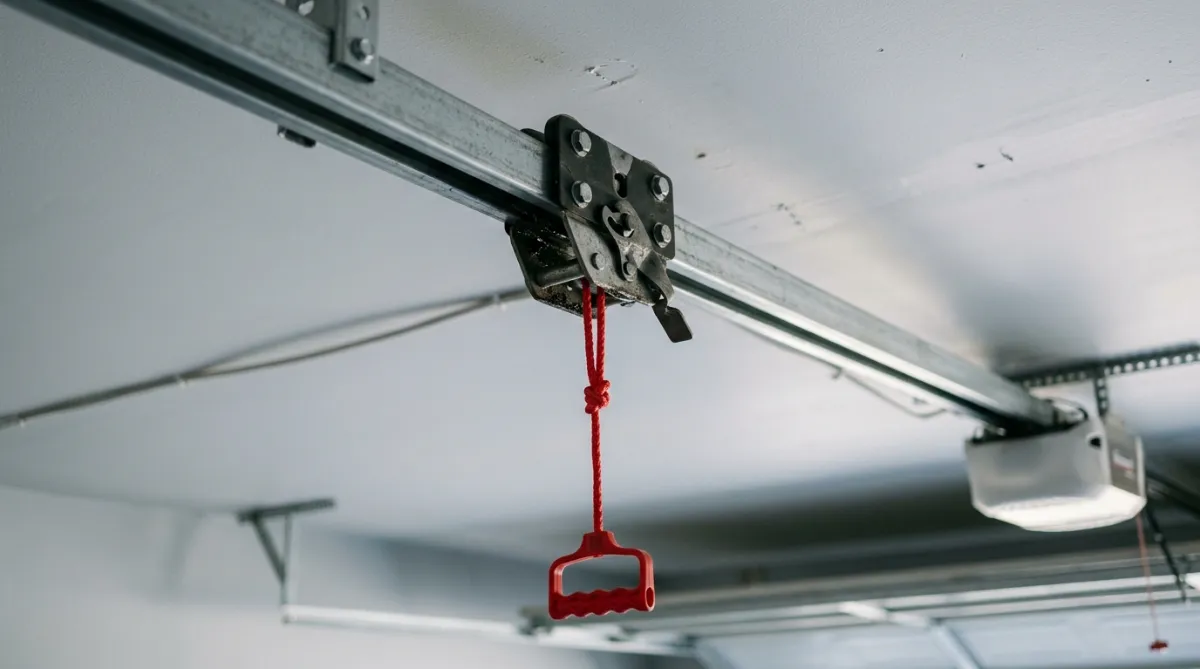
Look at the opener rail and trolley area near the emergency release. If the door was opened manually during a power outage, the trolley may not have re-engaged properly.
This is also why you may hear humming but see no meaningful movement.
Step 7: When a failing capacitor is a strong suspect
If the door moves smoothly by hand and isn’t heavy, but the opener still hums and can’t start the lift, a capacitor can be the culprit on some opener designs.
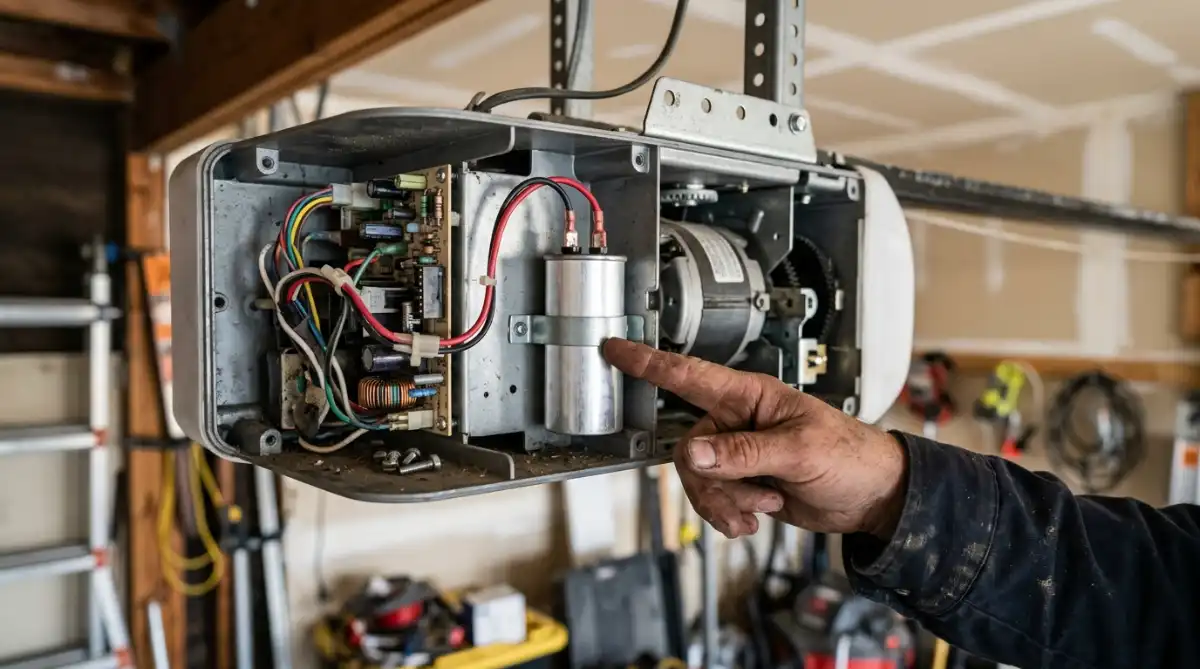
Typical real-world clues include:
- hums and then stops
- works sometimes, fails sometimes
- works better when the door is already partially lifted (less load)
- no sensor-related flashing patterns—just motor struggling to start
Capacitor diagnosis/replacement is usually straightforward for a technician, but if you’re not comfortable opening the opener housing, don’t attempt it.
Step 8: What to do next (based on what you found)
If the door was heavy: stop using the opener and call a garage door pro. Running the opener against a heavy door can damage the motor or gears.
If the door was binding: remove simple obstructions and consider a professional track/roller service if anything looks bent or off-track.
If the door was smooth by hand: consider professional service for the opener motor/capacitor/drive system. It’s faster than guessing.
When to call a professional (recommended)
Call a technician if:
- the door is heavy or won’t lift smoothly by hand
- the door is off-track or crooked
- you suspect spring issues (very common in “hums but won’t lift”)
- the opener hums even though the door is balanced
- you smell burning or hear grinding noises
FAQs
Why does my garage door opener hum but not open the door?
Most often because the door is stuck/binding, too heavy (spring issue), the trolley is disengaged, or the opener can’t start under load (capacitor/motor issue).
Can I fix a humming opener by increasing force settings?
Not recommended. If the door is heavy or binding, increasing force can be unsafe and can damage the opener. Do the manual lift test first.
What’s the safest first test?
Disconnect and try lifting the door by hand. If it’s heavy, stop and call a pro.