Garage Door Sensor Lights Are On but Door Still Won’t Close: What to Check Next
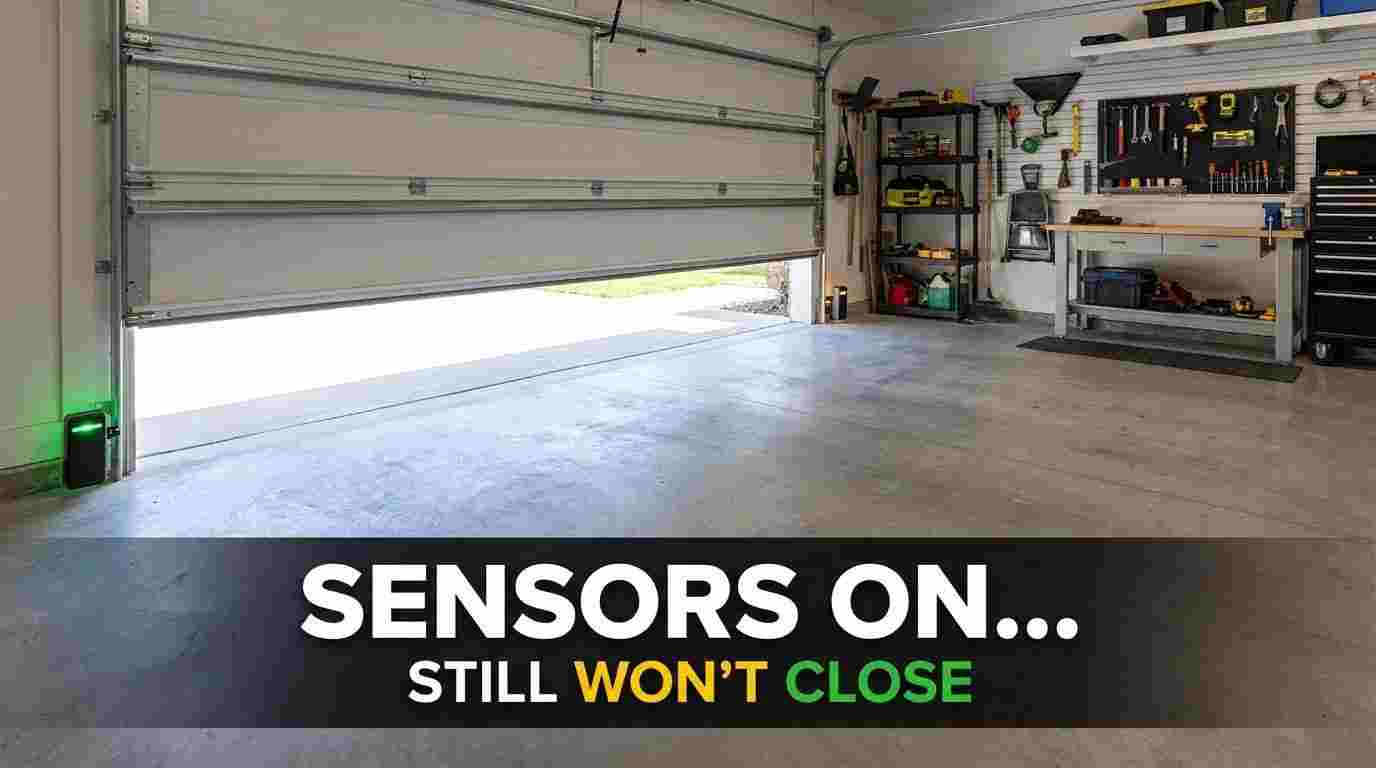
Garage Door Sensor Lights Are On but Door Still Won’t Close: When your garage door safety sensor lights are on and steady, it’s natural to think, “Sensors are fine—so why won’t the door close?” This is a very common situation. The sensors can look perfectly normal, yet the opener may still refuse to close because it detects resistance, hits an incorrect travel limit, gets confused by glare, or the door is binding just enough to trigger a safety reversal.
In this guide, you’ll learn what to check after you’ve confirmed the sensor lights are on—without wasting time re-aligning sensors over and over.
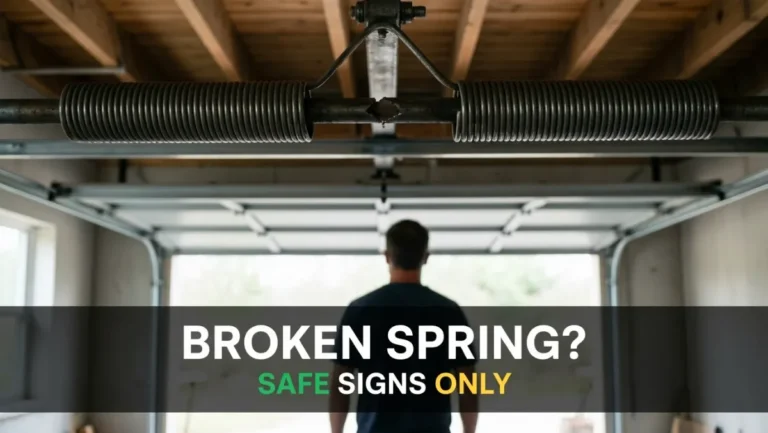
Safety note: This article covers safe troubleshooting only. Do not adjust or repair springs, cables, or tension hardware. If the door feels heavy, moves crooked, or binds hard, stop and call a garage door professional.
First: what does “sensor lights are on” actually mean?
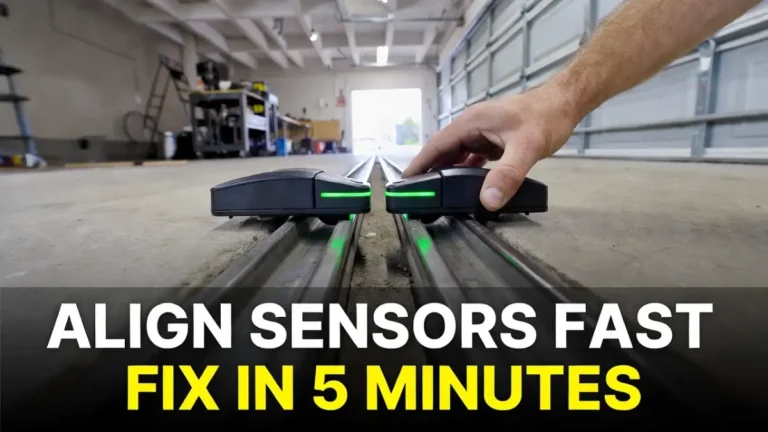
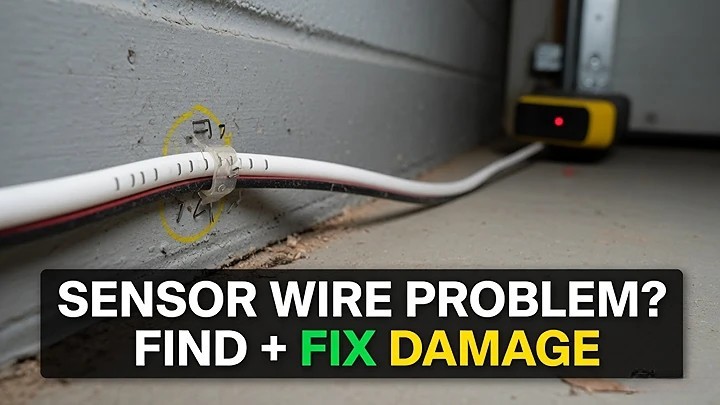
On many systems, one sensor shows amber/yellow (sender) and the other shows green (receiver). What matters most is that they are steady (not flickering). If a light is blinking or goes out when the door moves, you may still have a sensor wiring/bracket issue—even if it looks “on” at a quick glance.
If both lights are truly steady, then the next likely causes are usually door resistance or travel/force settings.
The fastest way to diagnose: watch how it fails to close
Before changing anything, do one close attempt and watch carefully. Your door’s behavior tells you what to check next:
- It starts closing, then immediately reverses: often sensors/glare, or something breaking the beam path, or vibration.
- It closes most of the way, touches the floor, then pops back up: often travel limits or resistance at the bottom seal/floor.
- It won’t close with the remote but closes only when you HOLD the wall button: often “supervised close” mode (the opener isn’t satisfied with the safety system).
- It stops partway and stays there: often binding/track resistance or opener settings.
Keep that pattern in mind while you follow the steps below.
Step 1: Try closing with the wall button (this is the best clue)
Go inside and press the wall button.
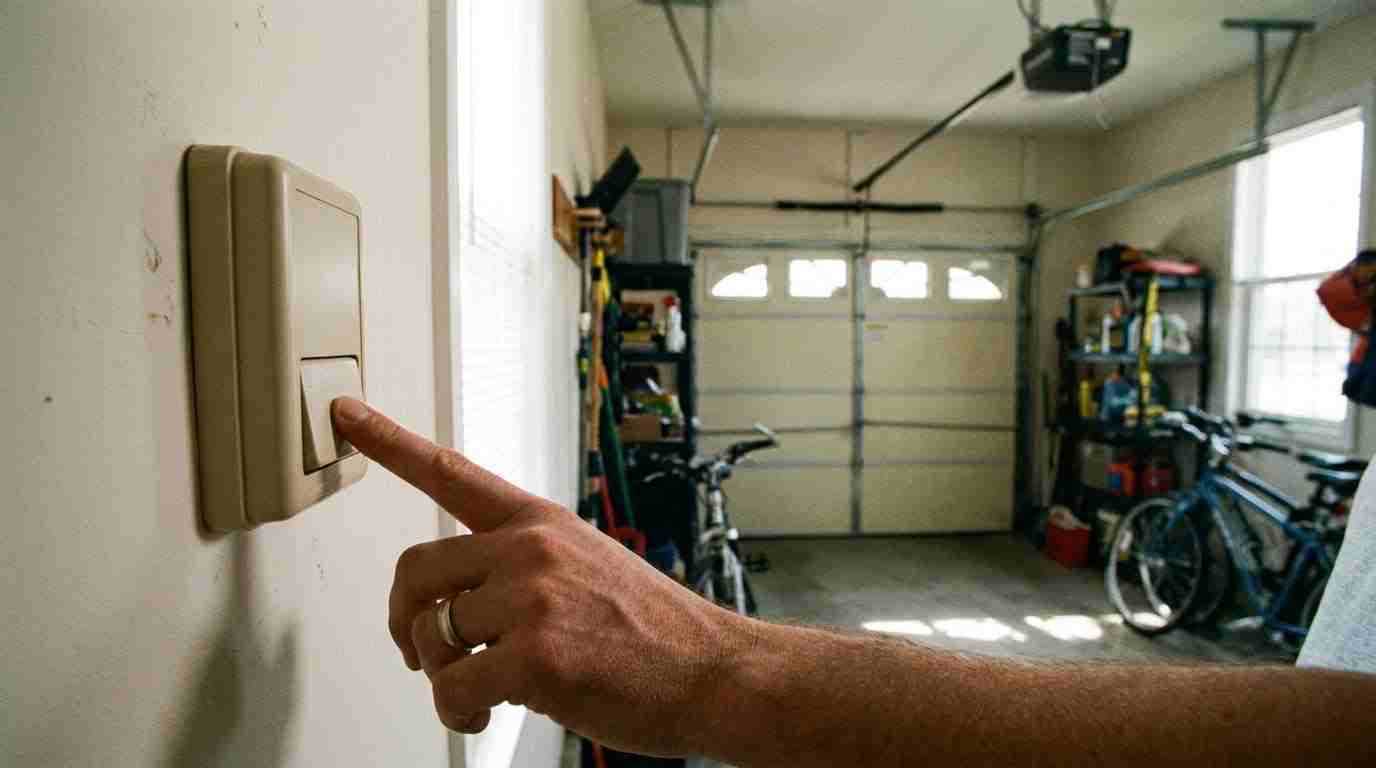
If the door closes only when you press and hold the wall button, that’s a strong sign the opener is in a safety override mode. Even if the sensor lights look steady, the opener may still be seeing an intermittent beam issue (glare, slight misalignment, bracket shift, wiring flicker). In that case, you’ll want to double-check glare and bracket stability.
If holding the wall button still doesn’t close the door, then it’s more likely a resistance/limits/binding issue.
(Internal link idea: your “Hold Wall Button” post fits perfectly here.)
Step 2: Confirm the beam path is truly clear (quick, but don’t obsess)
Yes, you’ve checked the lights—but still do a quick visual pass at the bottom of the doorway. Small things can interrupt the beam without changing the LED behavior in an obvious way, especially if they’re near one sensor.
Look for toys, leaves, trash bag corners, a broom handle near the track, or even spider webs right in front of the lens. This should take 10–20 seconds, not a full cleanup session.
Step 3: If it fails at certain times, suspect glare (even with steady lights)
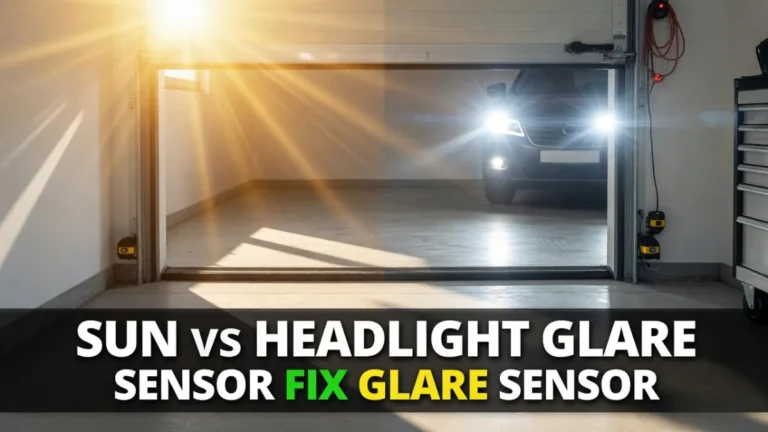
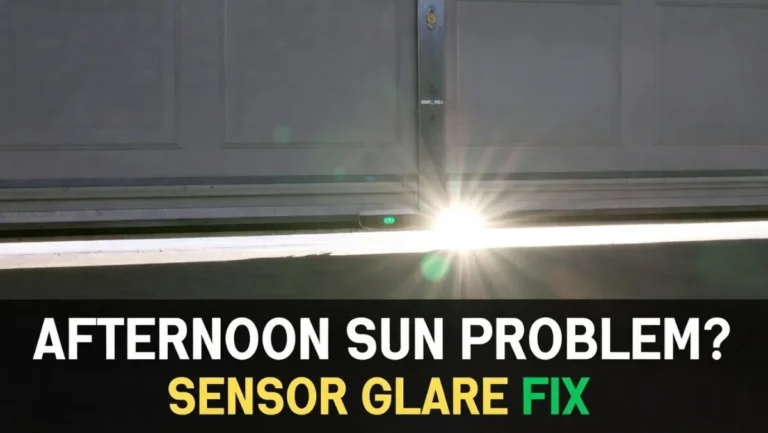
Glare can act like an invisible “beam blocker.” It can come from:
- afternoon sun (common in west-facing garages)
- car headlights at night
- bright exterior floodlights shining toward the sensors
A fast confirmation test is to briefly shade the receiving sensor with your hand (don’t touch the lens) and try closing again. If it closes immediately, glare is likely the cause.
The long-term fix is usually a small visor/shade above the receiver sensor so direct light can’t hit it.
(Internal link idea: your “Sunlight vs Headlight Glare” post.)
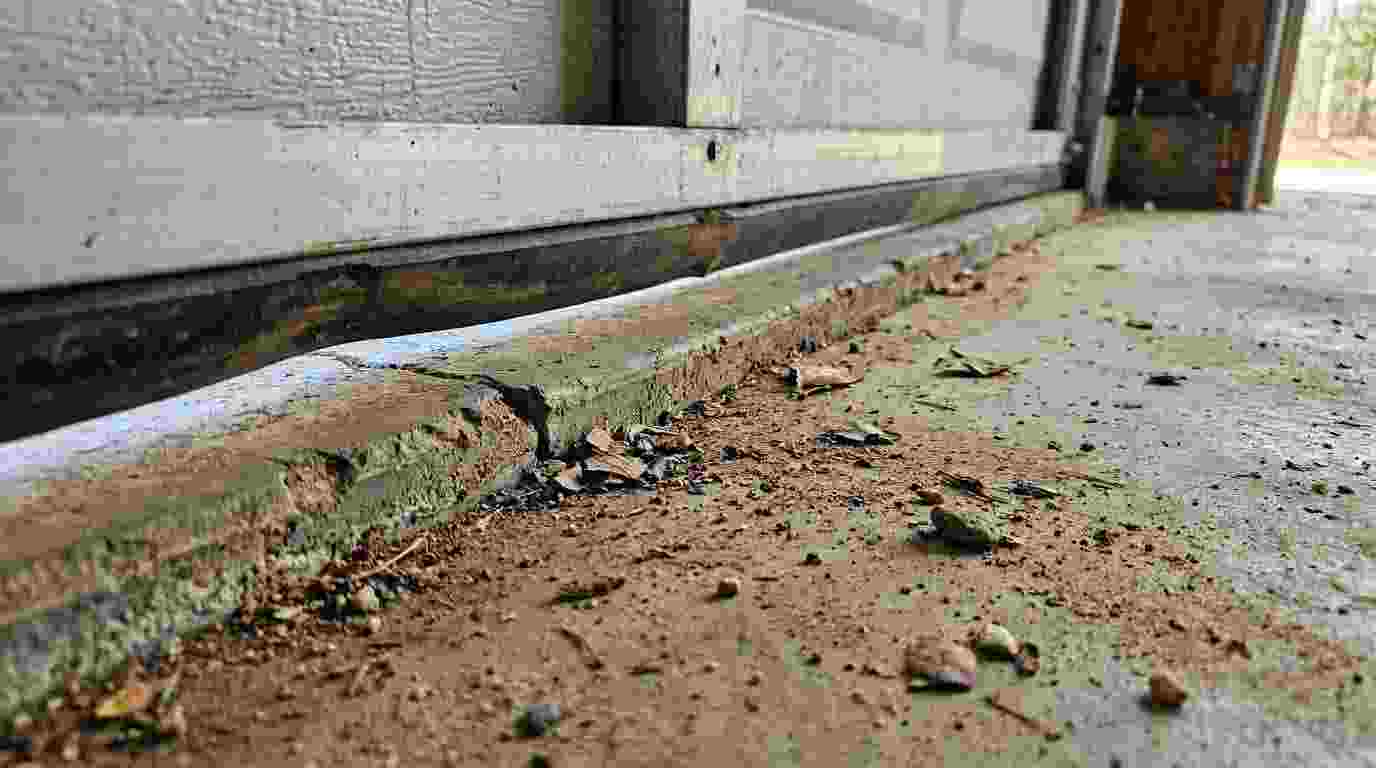
Step 4: Check the floor line and bottom seal (most common “sensors look fine” cause)
If your door closes most of the way and then reverses, focus on the last 1–2 inches.
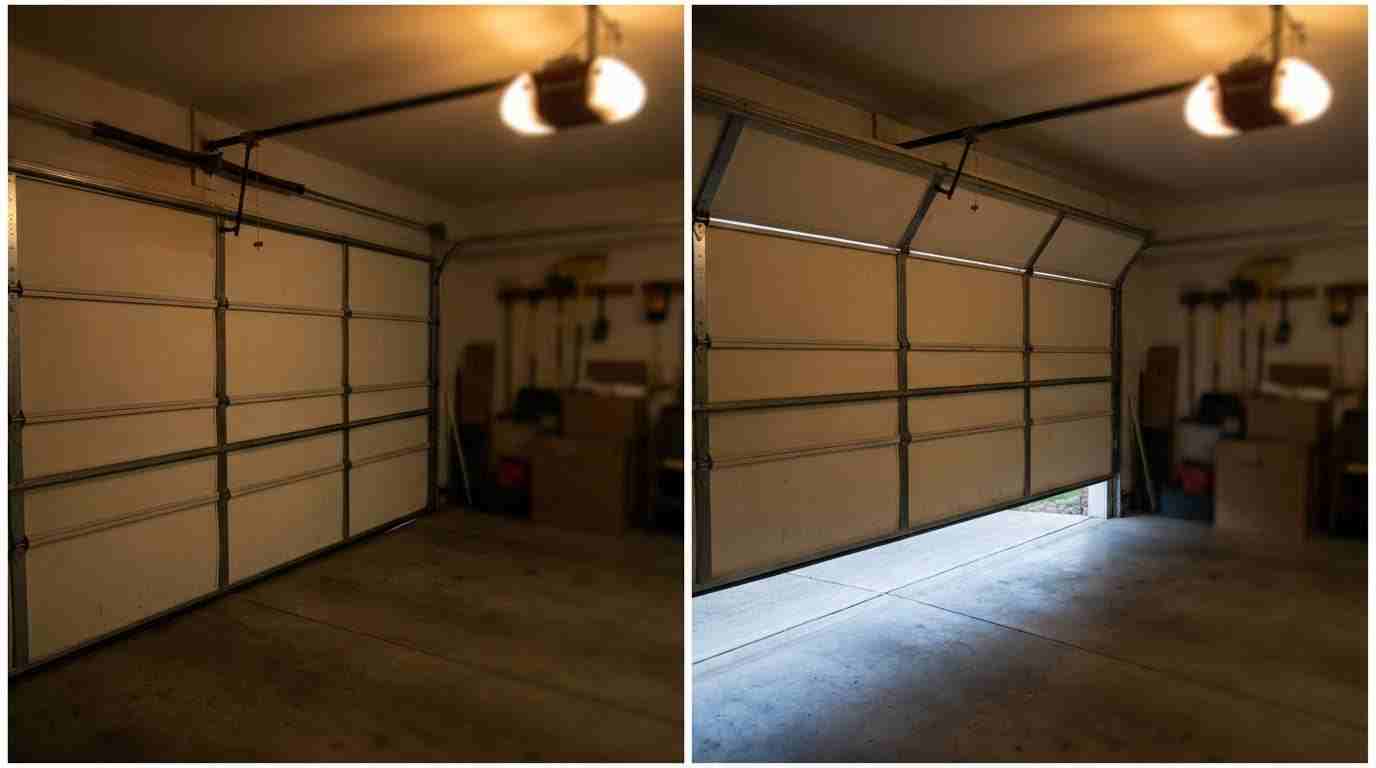
A garage door can reverse because:
- the bottom seal catches on uneven concrete
- there’s a raised threshold
- debris/ice is at the floor line
- the door is pushing too far into the floor (limit issue)
Clear the floor line and try again. Also look at the bottom seal—if it’s folded or torn, it can snag and trigger a reversal.
Step 5: If it touches the floor then reopens, think travel limits (not sensors)
This pattern is classic: door closes, touches the floor, then pops back up. That usually points to close travel limit (or end-of-travel resistance), not sensors.
If you decide to adjust limits, do it carefully:
- Use your opener’s manual for your exact model
- Adjust in tiny increments
- Test after each change
Avoid the common mistake of increasing force to “power through” real resistance. If the door is binding, more force is not the solution.
(Internal link idea: your “Sensor vs Travel Limits” post.)
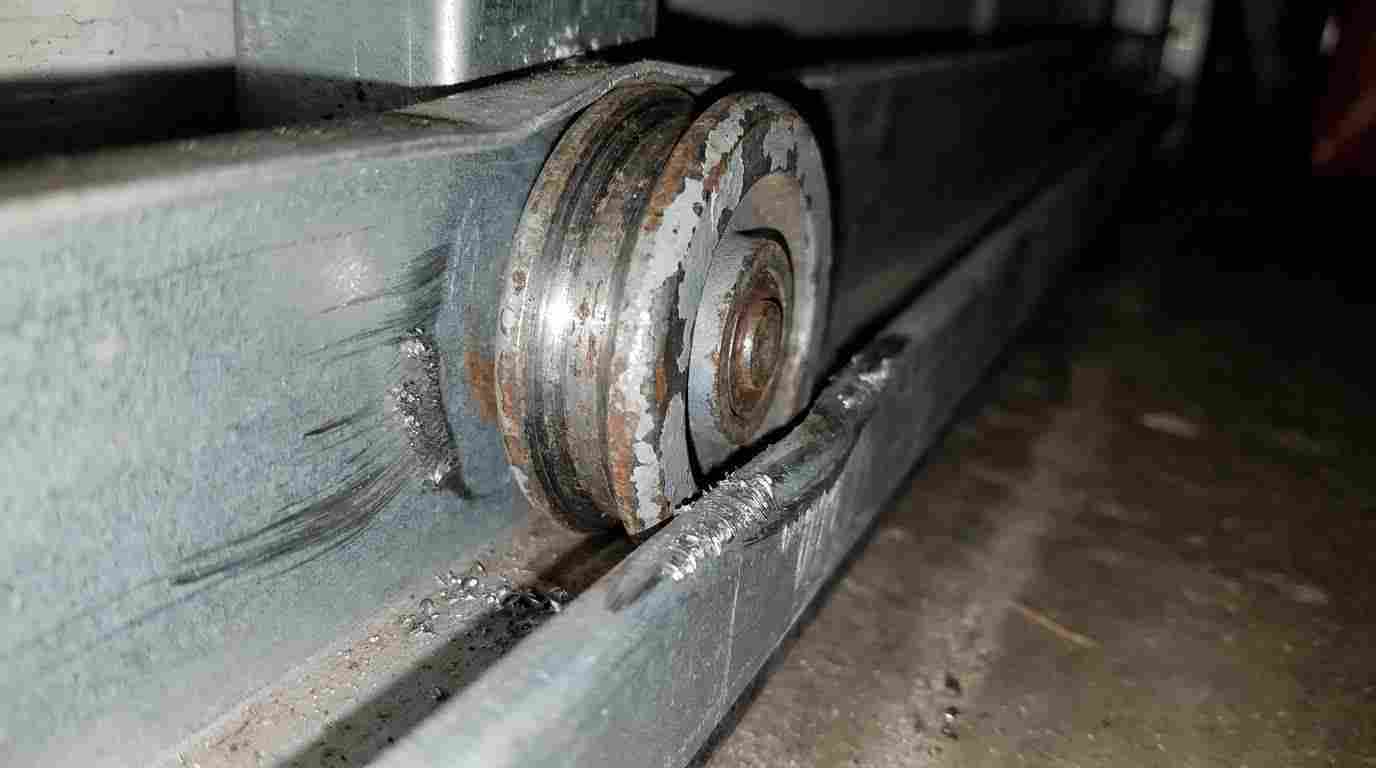
Step 6: Do a quick binding check (tracks/rollers) if the door feels “rough”
If the door is rubbing, jerking, or binding, the opener may reverse even when sensors are fine.
You don’t need to do repairs here—just observe:
- Does it reverse at the same spot every time?
- Do rollers look tilted?
- Does one side lag behind the other?
If the door looks crooked or off-track, stop and call a pro. Mechanical binding is not something to “fix with settings.”
Step 7: Power-cycle the opener (quick logic reset)
If everything looks normal but the opener still refuses to close, a simple reset sometimes clears a glitch—especially after a power flicker.
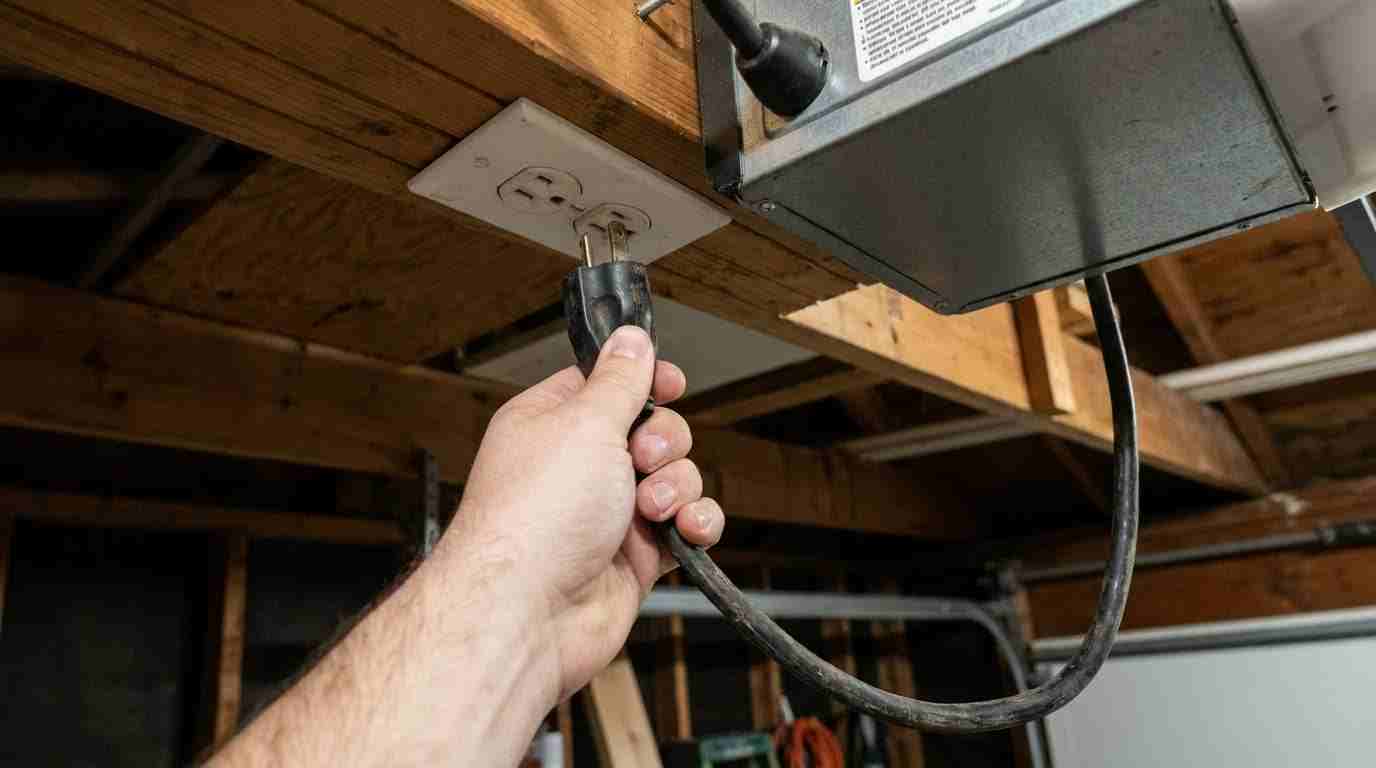
Unplug the opener for 30–60 seconds, plug it back in, then try closing again.
This won’t fix a physical problem, but it can clear a stuck logic state.
When to call a professional
Call a garage door technician if:
- the door is heavy by hand
- the door is crooked/off-track
- the door binds hard or makes loud grinding noises
- limit/force adjustments are confusing or make behavior worse
- the issue keeps returning even after confirming glare and bottom resistance
FAQs
My sensor lights are on and solid—can it still be sensors?
Yes, but less likely. It can still be glare, a loose bracket that shifts during motion, or wiring that flickers. If the failure is time-based (afternoon/night), glare is a top suspect.
Should I increase the close force setting?
Only after you’re sure the door is not binding and the floor line is clear. Increasing force to push through resistance can be unsafe.
Why does it close only when I hold the wall button?
That usually indicates the opener isn’t satisfied with the safety system during an automatic close (often sensors/glare/intermittent beam issue).